
Lamb for Easter
During the Medieval and Early Modern periods, Easter was a significant feast day in the European Christian calendar and was celebrated throughout the continent. The consumption of eggs and various types of bread became staples during this time; however, meat remained the focal point of the feast. Throughout the Middle Ages, Christians marked holidays with specific foods, and in Europe, lamb became a traditional meat served to celebrate the resurrection of Christ. This was due to the fact that the lamb symbolised the Last Supper, God, and His ascension to the throne of heaven. During Easter, European Christians engaged in food through a sensual experience as lamb represented the teachings of the Last Supper and Christian values at this time. The consumption of lamb allowed participants to engage with the senses of touch, taste, sight, and movement as they consumed their Easter meal. Hence, the consumption of lamb during this period served to perpetuate the religious experience for participants following the end of Lent.
Easter Meals
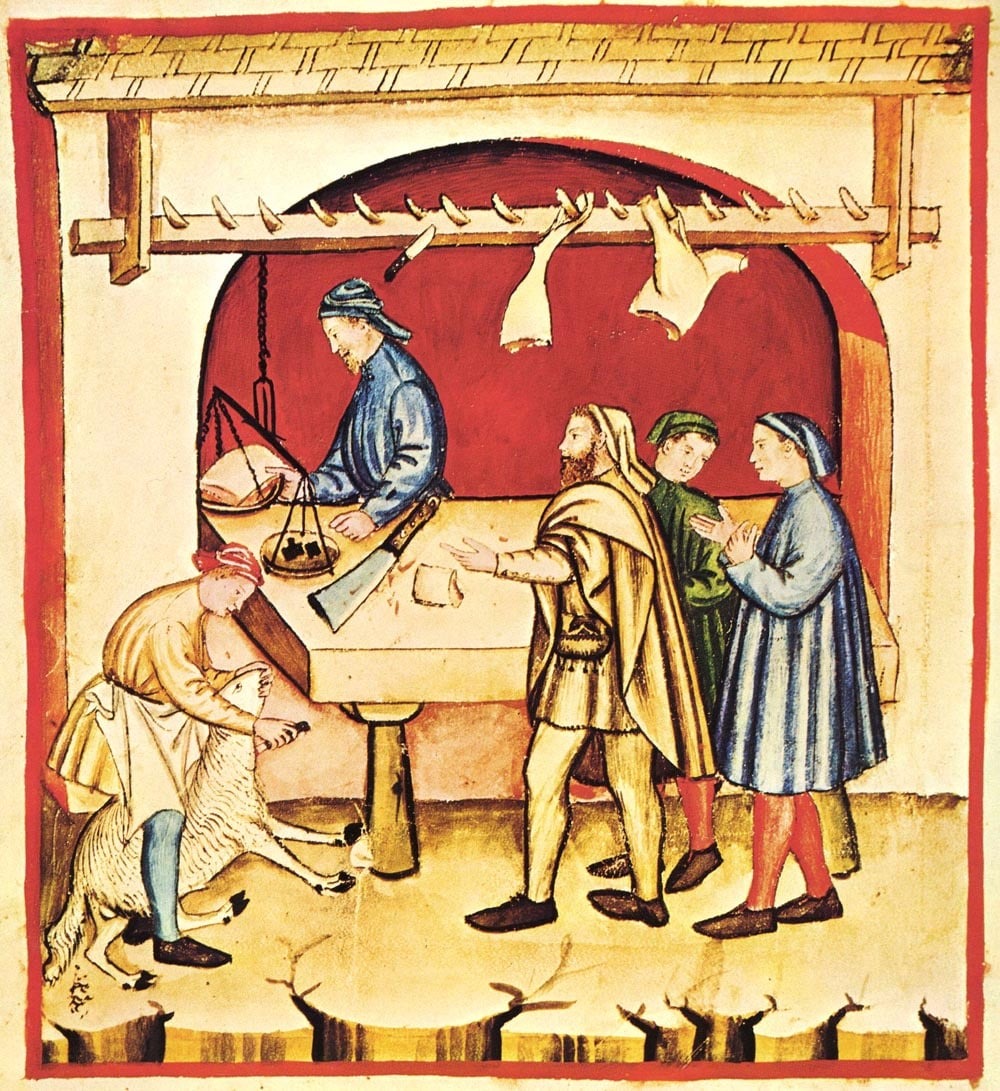
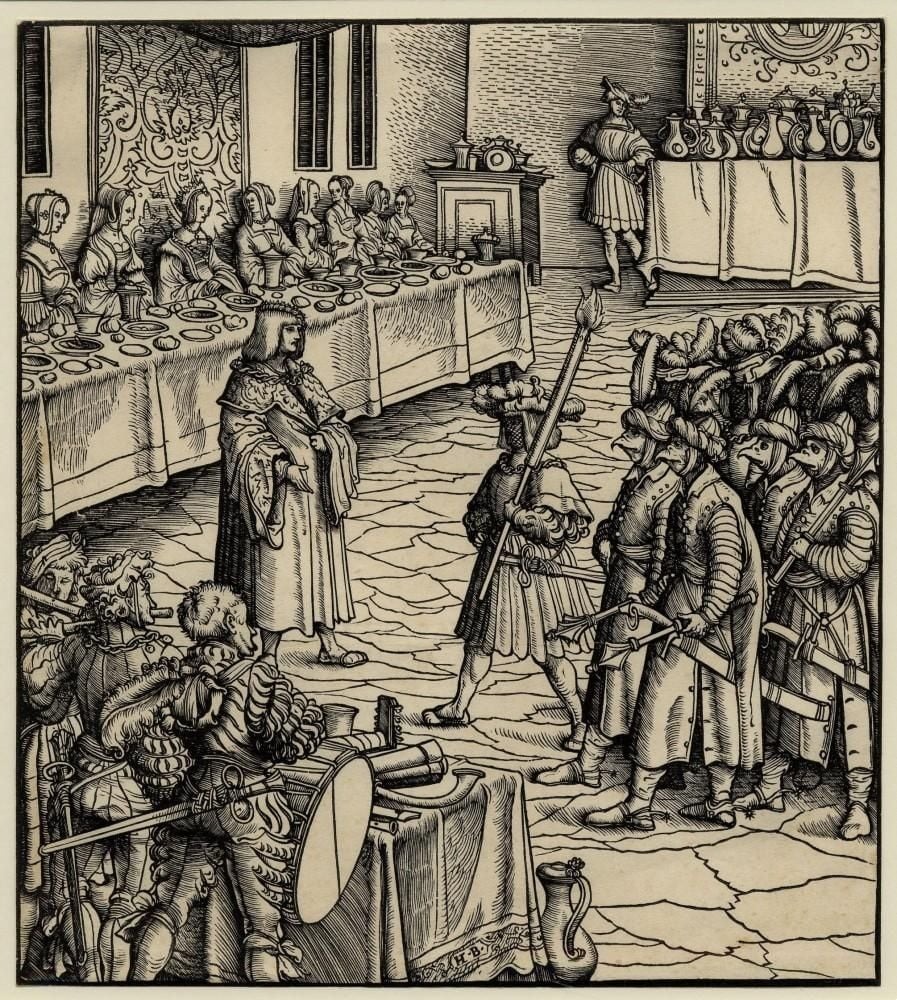
Medieval & Early Modern Lamb
England
France
Italy
Greece
Poland
Mimicking Christ
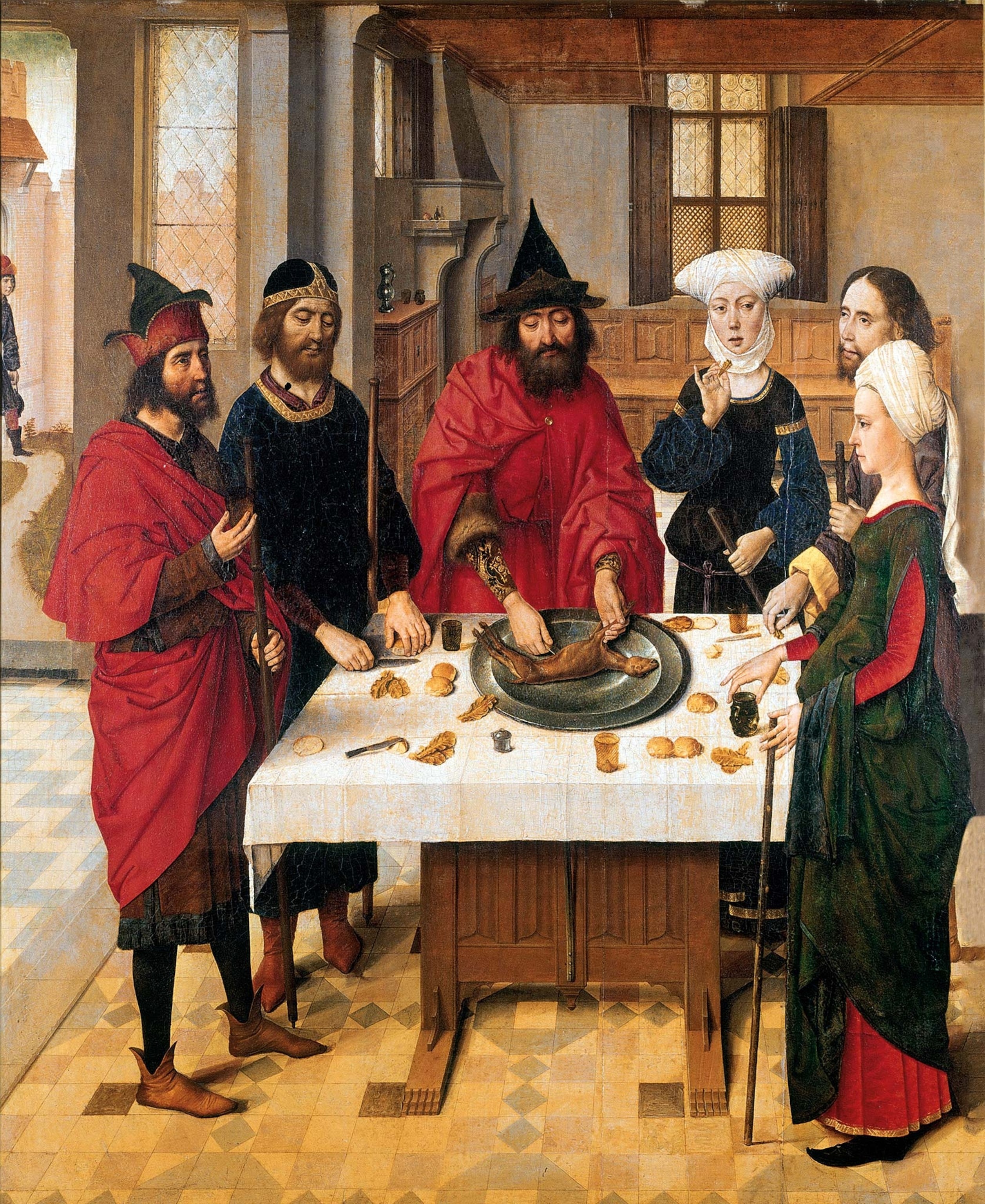
During the Medieval and Early Modern periods, Christians often sought to emulate aspects of Christ’s life in their own. This is further evidenced by their consumption of lamb during Easter, which symbolises Christ’s actions during the Last Supper. The tradition of eating lamb at Easter originated with the Jewish observance of Passover, which Christ participated in prior to his crucifixion. In England during the Early Modern period, Passover plays were created to depict the story of Christ, including his final meal before the crucifixion. These plays share similarities in their depictions of the Last Supper, which is attributed to the use of traditional Eucharistic iconography in their creation. These similarities also highlight the significance of lamb in Christ’s final meal, emphasising its symbolic connection to the Last Supper.
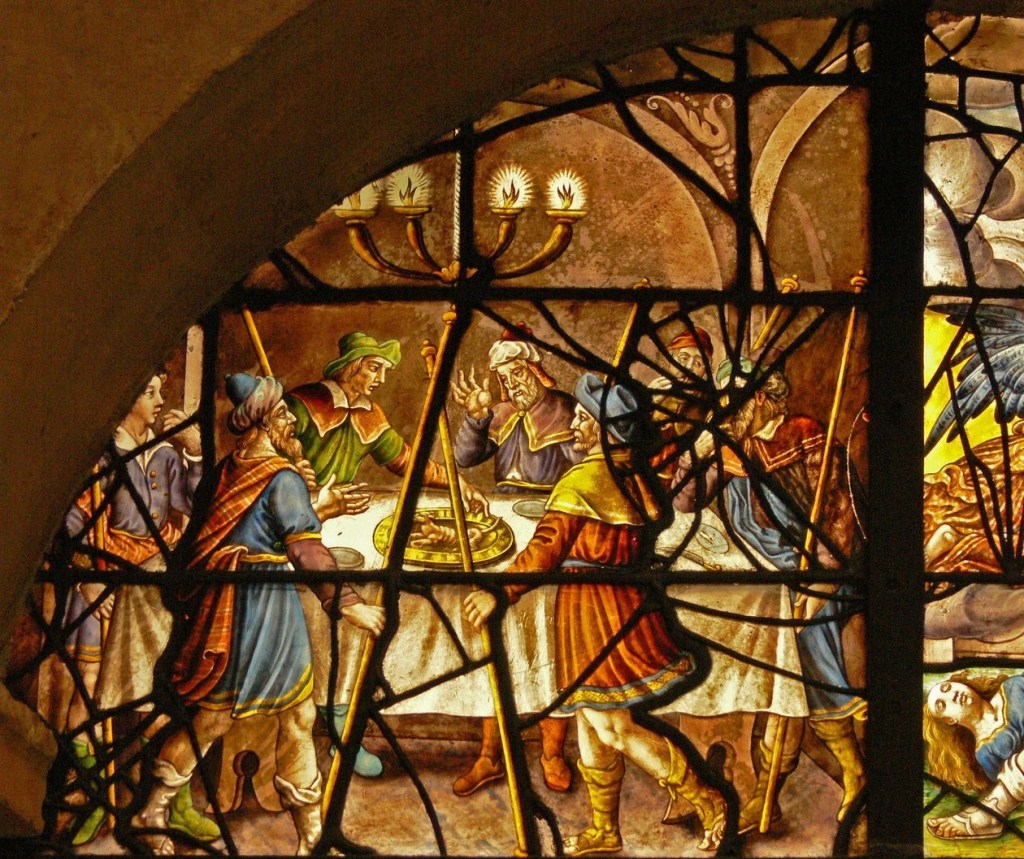
Detail of a Jewish Passover meal featuring the paschal lamb. Stain glass window. L. Gaultier, (17th century: Cloister of Catechism Chapel, Eglise Saint-Etienne-du-Mont, Paris)
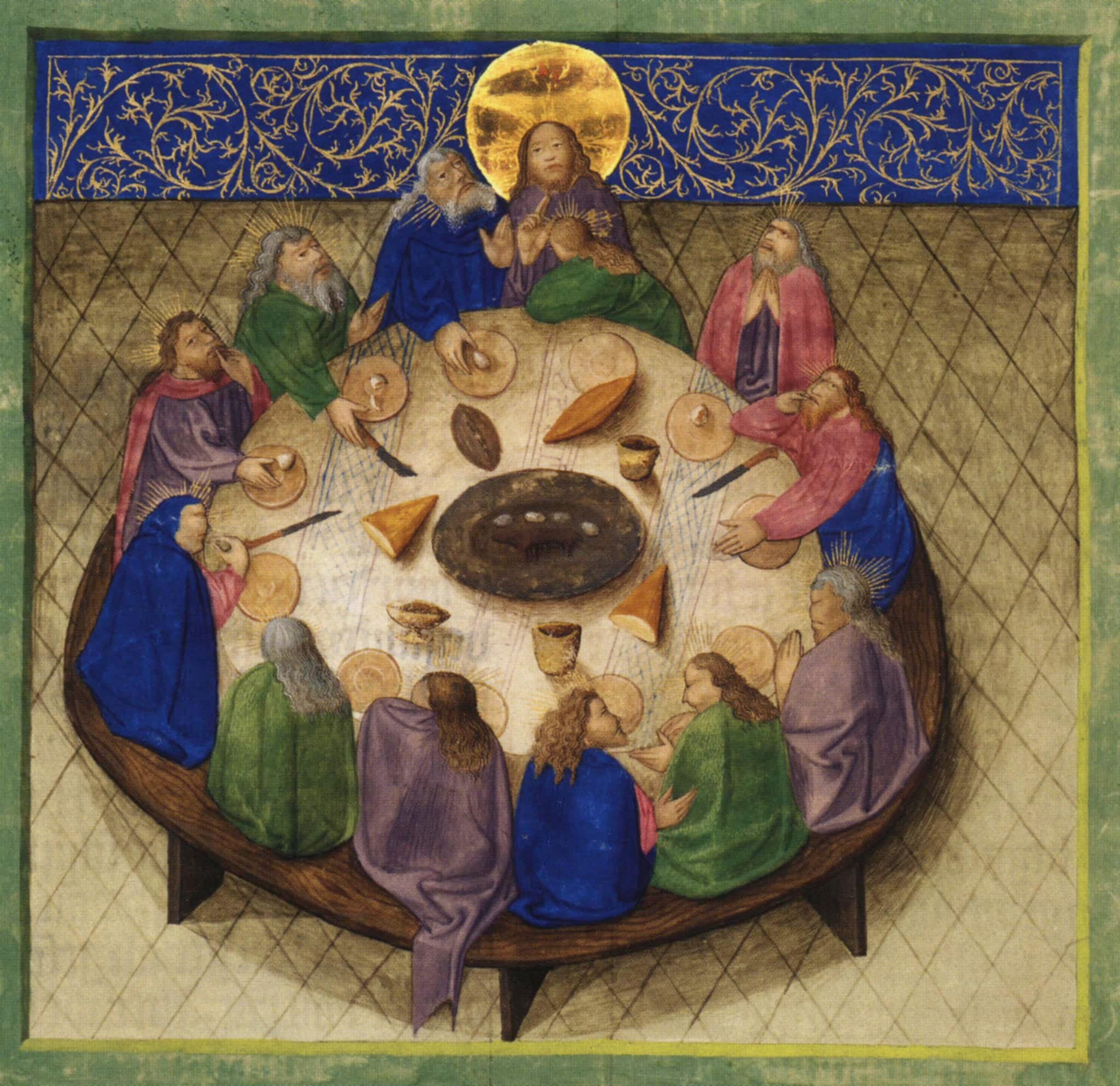
Salzburg Grillinger Bible workshop, Mattias Gerung and others, The Last Supper of the Ottheinrich Bible (1430-1531: Bayerische Staatsbibliothek, Munich)
In Medieval manuscripts, such as Salzburg Grillinger’s The Last Supper from the Ottheinrich Bible, bread and wine surround the plate of lamb at the centre of the round table, with Christ at the top and His disciples seated around the food but gazing towards Him. This scene, much like the various English Passover plays, represents the moment when Christ makes a speech to His disciples, where He distributes the bread as His body, the wine as His blood, and the lamb as His humanity. In Salzburg’s illumination, Christ, with his halo, preaches to the apostles that He is the “new lomb.” In the English Passover plays, Christ’s speech tells viewers about the pascal lamb in the Old Testament as the “old lawe,” and Him as the new. By reenacting the motions of Christ as He made this significant speech, Medieval and Early Modern Christians were reminded of Christ’s life and His humanity which was sacrificed for the sins of the world. His body, His blood, and Him as the ‘lamb of God’ are all aspects that display how Christ had a human side that was sacrificed for the world’s sins of the world and so could reign in heaven.
These feasts also served to symbolise the distribution of food among the disciples of Christ. Medieval English lords, who would provide an Easter feast for their peasants, reflect Christ’s movements during the Last Supper. In these feasts, the lamb would be cut in front of the lords and distributed to their peasants, further emphasising the symbolic connection to Christ’s distribution of the lamb among his disciples. The custom of sharing food, regardless of social status, was exemplified by Christ during His lifetime, and this practice is also connected back to English lords in their distribution of food to their peasants. The tradition of the lamb meal not only commemorated Christ’s Last Supper by consuming the same food He would have eaten, but also reenacted His actions by distributing the lamb among all those present. This reenactment was also observed in the Middle Ages, when the Popes in Rome distributed lamb and later lamb-wax figures in a manner similar to Christ’s actions before the crucifixion. As the primary Easter meat, lamb enabled Medieval and Early Modern Christians in Europe to participate in the events of the Last Supper and to reenact aspects of Christ’s life.
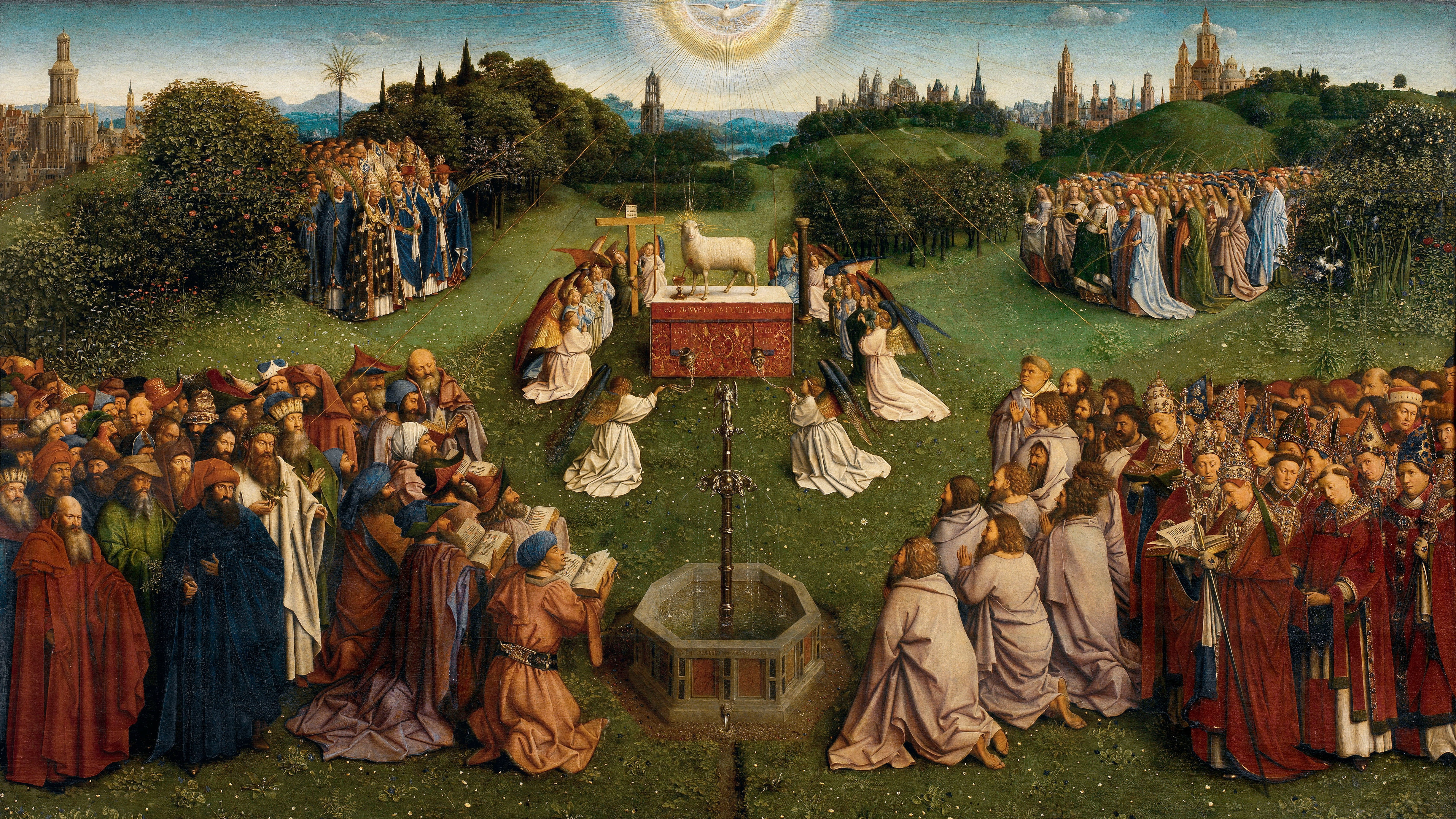
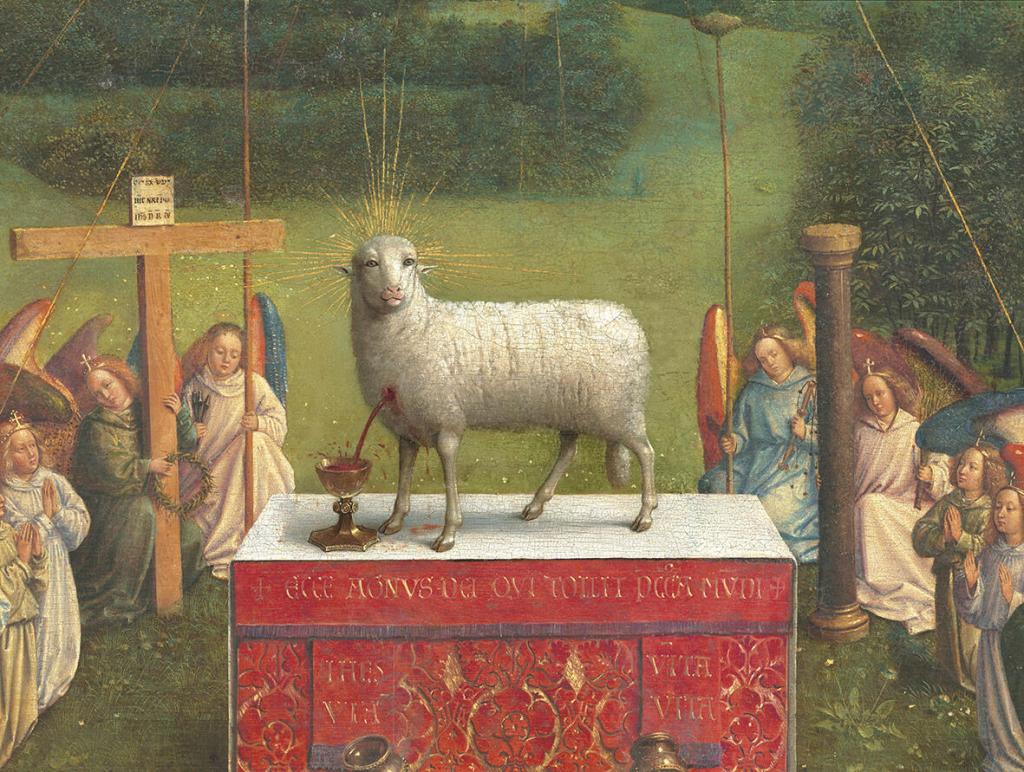
Hubert and Jan van Eyck, Adoration of the Lamb scene from the Ghent Altarpiece (Oil on wood, 1432: St Bavo’s Cathedral, Ghent, Belgium)
Consuming Christ
The use of lamb as a symbol of Christ’s sacrifice is significant in the story of the Last Supper, but as lamb was a more expensive meat it was only consumed during special occasions such as Easter. Caroline Walker Bynum’s book, Holy Feasts and Holy Fasts (1987), provides a Medieval perspective on the consumption of lamb during Easter, where “‘[We are] looking forward to the supper of the lamb… whose sacred body is roasted on the altar of the cross. By drinking His rosy blood, we live with God… Now Christ is our Passover, our sacrificial lamb; His flesh, the unleavened bread of sincerity, is offered up.’” This quote exemplifies how consumption of the lamb served as an act of acknowledgement and gratitude for Christ’s sacrifice, and it was seen as a way to partake in the sacrifice and become united with Christ.
The Ghent Altarpiece
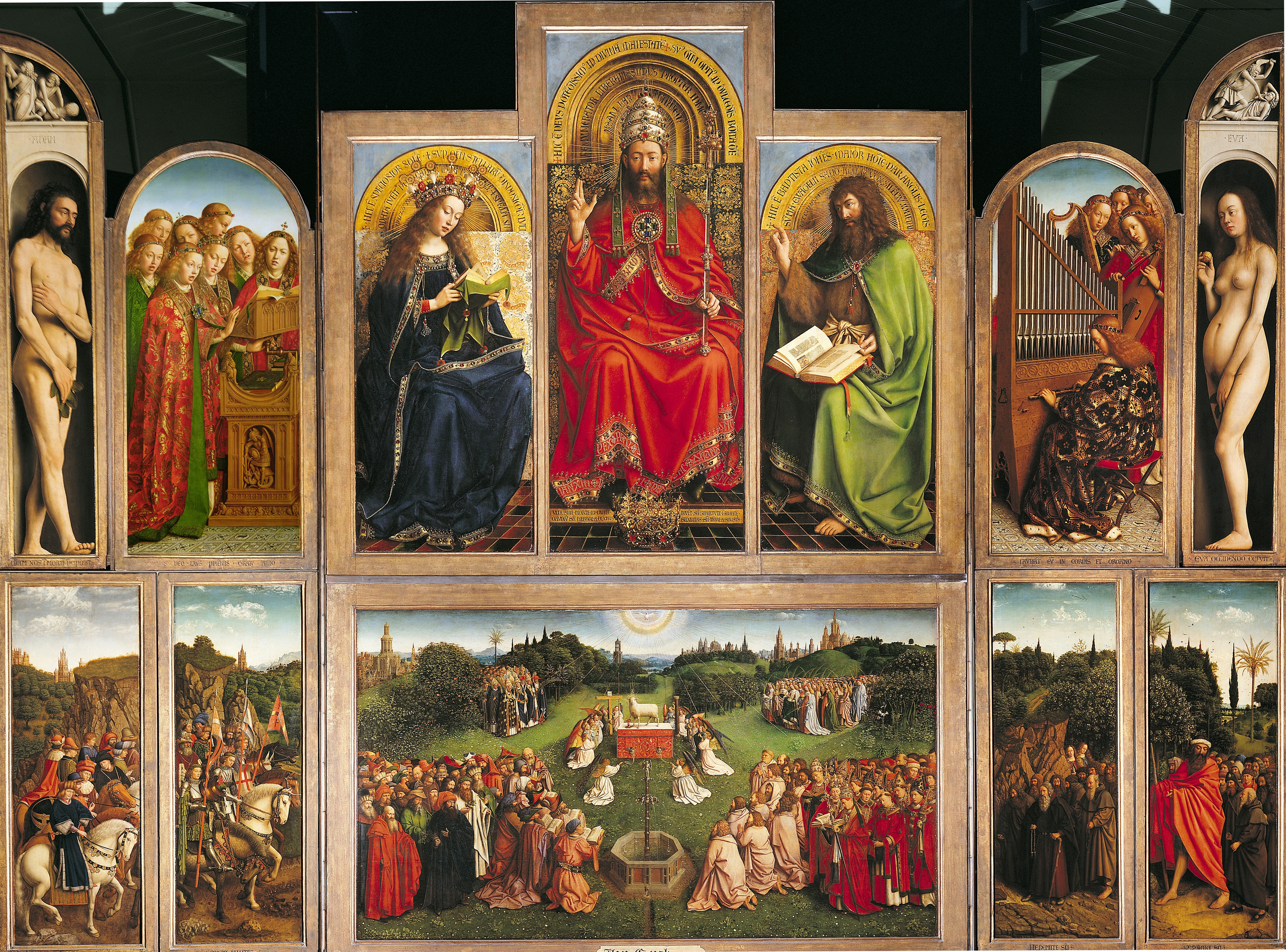
Image from the “Closer to Van Eyck” website
The Ghent Altarpiece (1432) is a 15th century altarpiece painting done by the brothers Jan and Hubert van Eyck. This altarpiece features twenty painted panels (twelve on the inside and an additional eight on the outside leaves which would have been visible when the altarpiece was closed). The Ghent Altarpiece is considered one of the most famous artworks from Europe and has famously been stolen several times, including most recently by the Nazis in WW2.
The Ghent Altarpiece is an outstanding visual representation of how the perception of Christ as a lamb evolved in the Medieval and Early Modern periods. As Christianity played a significant role in the lives of Europeans during this time, the power of its symbolism extended even into their eating habits. The consumption of lamb during Easter was not only a sensory experience but also a religious one, as it represented the sacrifice of Christ.
Hubert and Jan van Eyck, The Ghent Altarpiece (Oil on wood, 5.2 x 3.75 m, 1432: St Bavo’s Cathedral, Ghent, Belgium)
The cooked lamb that is traditionally served during the Easter feast is a visual representation of Christ’s sacrifice for the sins of the world, and it serves as a reminder for the reality of that sacrifice for Christian viewers. This symbolism is rooted in the Biblical reference to Christ as the “lamb of God,” given to Him by John the Baptist as a symbol of His vulnerability. The Easter lamb, therefore, represents both Christ and the anniversary of His crucifixion. In Medieval and Early Modern writings about Christ’s crucifixion, the lamb is used as a symbol to describe Christ’s sacrifice. For example, one description refers to “the innocent lamb which is killed and roasted on the altar of the cross,” while another says “on the cross the Lamb is lifted, there the sacrifice to be.” The use of the word “roasted” in the first description highlights the cultural practice of consuming lamb during Easter, as the lamb was roasted for the holiday and represented Christ ‘roasted on the cross’.
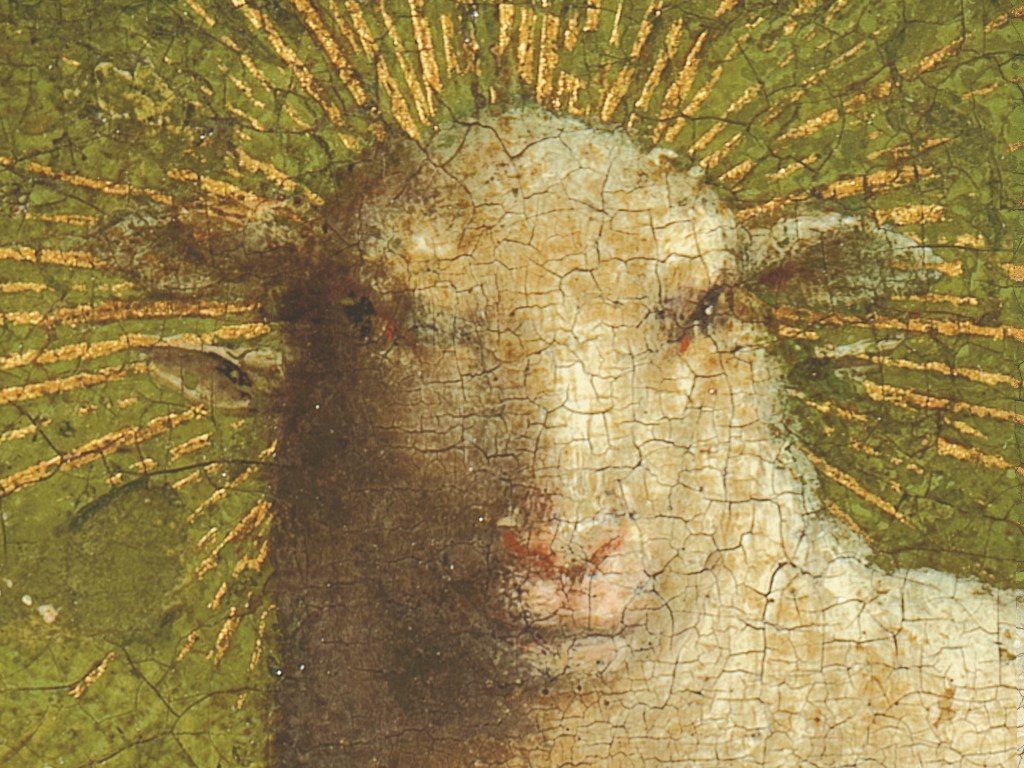
Detail of the old lamb face prerestoration. Hubert and Jan van Eyck, Adoration of the Lamb.

Detail of the lamb. Hubert and Jan van Eyck, Adoration of the Lamb.
The Sacrificial Lamb
As European Christians consumed lamb during Easter celebrations in the Medieval and Early Modern periods, the term ‘lamb of God’ held a deeper meaning beyond its analogy to Christ as the Son of God. According to historian Jhon Ben-Daniel, the concept of Christ as the ‘lamb of God’ signifies not only his role as a sacrificial victim, but also as the ruling and conquering Messiah. This distinction is evident in The Ghent Altarpiece from the 15th century Netherlands. The restoration that began in 2012 revealed the original face of the lamb, depicting a human-like figure in the scene of the Adoration of the Lamb. This representation of the lamb as Christ in a humanoid form highlights the perception of the lamb as more than just a symbol of God, but as God reincarnated in all matter.

Hans Holbein the Elder, Last Supper Predella (1501: Städel Museum, Frankfurt)
“Take veel other[wise] motoun and smyte it to gobettes. Seeth it in gode broth; cast therto erbes yhewe gode won, and a quantite of oynouns mynced, powdour fort and safroun, and alye it with ayren and verious: but let it not seeth after.”
Curye on Inglysch, IV.18 (The British Museum, London)
Feeling like Christ
The resurrection of Christ through taste was represented through the consumption of lamb during the Easter meal, which marked the first time in 40 days that Medieval and Early Modern Christians consumed meat. The overpowering taste of the lamb would have resonated with the concept of Christ’s crucifixion followed by the resurrection that placed Him on the throne of heaven. The miracle of God was a wonderful thing, and so Medieval and Early Modern Christians experienced the power of Christ’s miracles through the taste of the lamb. This is seen through the addition of other strong flavours within the preparation of the lamb, including honey and fruits that were very sweet, and vinegars and sauerkraut which were quite pungent. These flavours added to the contrasted pallet of Lent, and produced an even greater distinction for Medieval and Early Modern participants.

Pieter Bruegel the Elder, The Fight Between Carnival and Lent (Oil on panel, 118 x 164 cm, 1559: Kunsthistorisches Museum, Vienna)
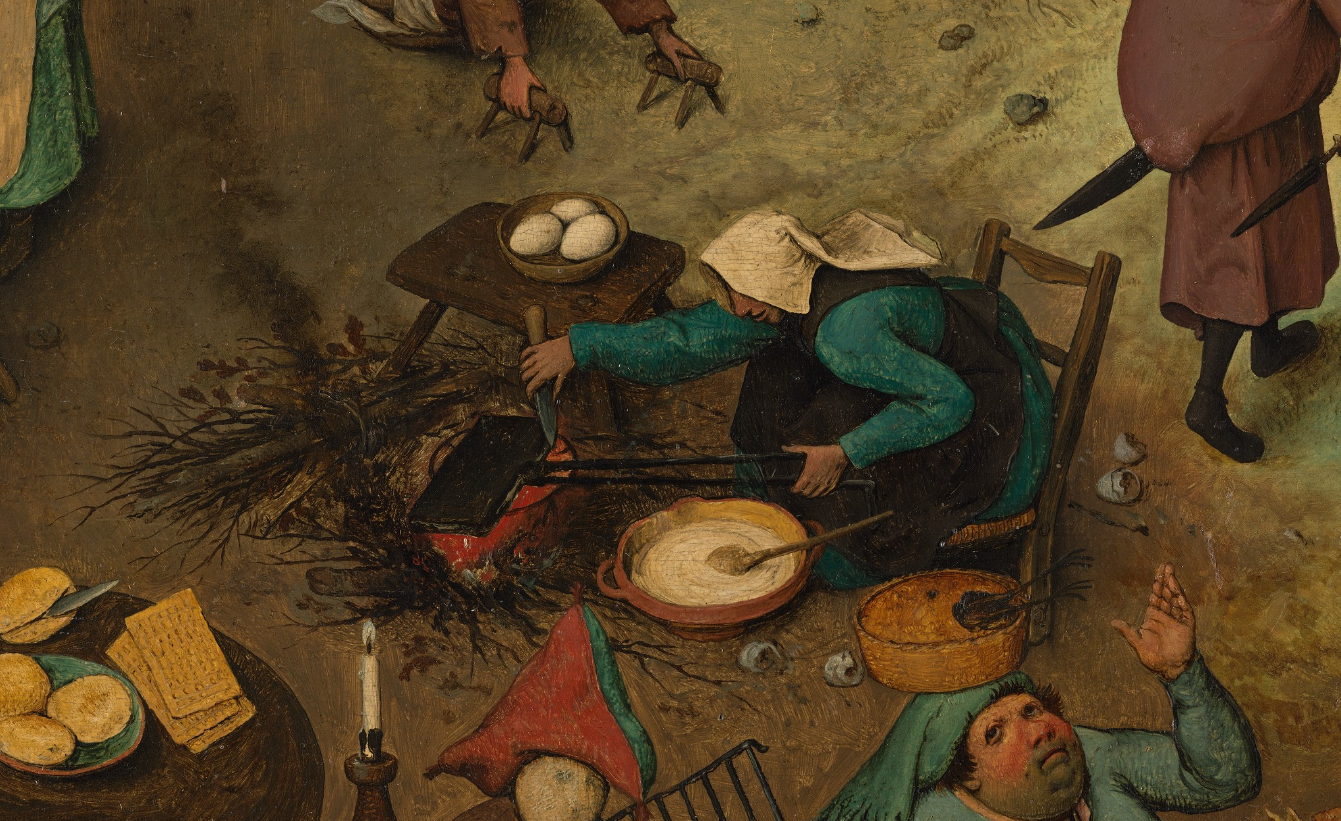
Detail of cooking. Bruegel, The Fight Between Carnival and Lent.
The reintroduction of meat during Easter in the Medieval and Early Modern periods brought about a struggle among Christians, as expressed through art and literature such as Pieter Bruegel’s 1559 painting Battle Between Carnival and Lent. In the Battle Between Carnival and Lent, Brugal portrays the devout Christian who sought to demonstrate piety through fasting, as well as the Christians who wished to celebrate life and God through feasting. Although both parties were embroiled in conflict with one another, their shared religious connection with the food of the Easter feasts ultimately allowed them to reconcile once Lent and Carnival had both concluded.
Food & Lent
To honour the celebration of Easter, which symbolises Christ’s sacrifice and resurrection, European Christians often consumed lamb dishes during this time. However, class distinctions and regional food cultures sometimes altered people’s participation in Lent. While some adhered strictly to the rules of Lent, others found creative ways to bend or even circumvent them. For instance, beavers were considered fish because they used their tails in the water, leading to their overhunting during “fyssch” days in Europe. Additionally, some individuals created false animal products, such as eggs made from almond paste, in order to indulge in their cravings during Lent. Despite these variations in observance, participation in Lent and the subsequent Easter feast created a shared sensory experience for those in the Medieval and Early Modern periods. Regardless of what was consumed during Lent, eating a richer meat, such as lamb, would have inevitably engaged with the senses of Medieval and Early Modern Christians in Europe, as they remembered Christ’s suffering and His ascension to the throne of heaven. The lamb served at the Easter table would have contrasted people’s everyday eating experiences, and changed the way they saw, tasted, and moved in the process of consuming meat again.
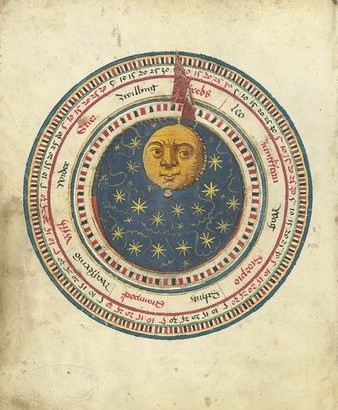
Johannes von Gmunden, German manuscript of the liturgical calendar (ca. 1496: private collection)
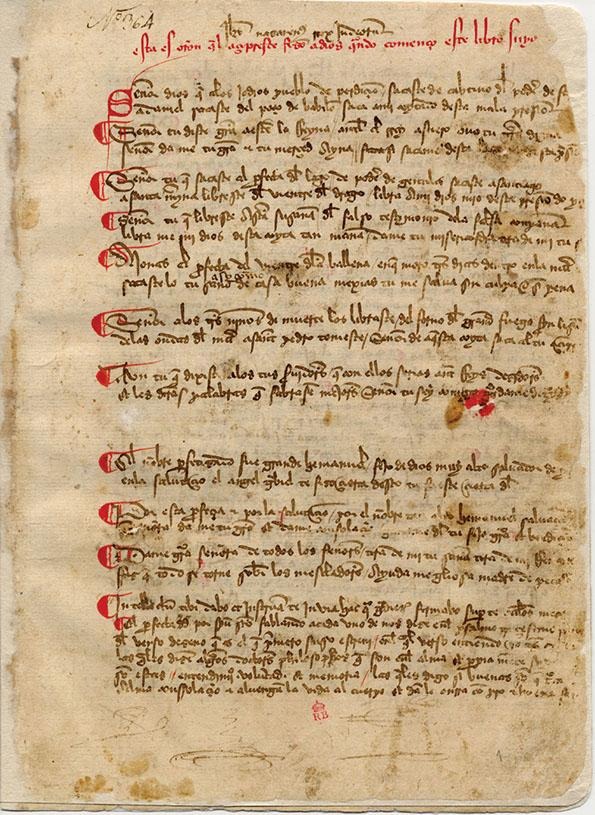
Manuscript folio from a copy of the “Libro de Buen Amor” (ca. 14th century: Biblioteca Histórica de la USAL, Salamanca)
The Spanish poem “Libro de Buen Amor” by Juan Ruiz depicts the conflict between dietary restrictions of Lent and the freedom to eat meat afterwards. In the poem, Ruiz refers to this as the battle between Sir Flesh and Lady Lent, where Sir Flesh ultimately emerges victorious at the end of Lent when meat can be consumed once more. However, the overconsumption of food in the early Middle Ages led the Church, named gluttony a cardinal sin in order to promote moderation in eating. Nevertheless, records of Easter feasts during the Medieval period reveal excessive food consumption, such as Bishop of Salisbury Richard Mitford’s feast in 1407, which reportedly included two roast lamb, venison, beef, pigs, piglets, 20 capons, 48 chickens, and over 500 eggs consumed in one day.
Conclusion
By the Early Modern period, religious symbolism and the sensual experience were used to justify this excessive consumption during Easter meals. Participants consumed Christ as the lamb, with the flavour experienced serving as a symbol of Christ’s sacrifice. This ritual act of consuming lamb after abstaining from meat for a prolonged period was seen as an acknowledgement of Christ’s sacrifice. The lamb, in particular, evoked Medieval and Early Modern religious senses through its taste, touch, and appearance, with its flavour serving as a reminder of the goodness that God brings to the world and the miracle of His resurrection.
The power of the resurrection and God’s ascension to the throne of heaven is celebrated by the community coming together, giving thanks, and acknowledging Christ’s role in their salvation. Medieval Europeans believed lamb to be a soft meat that was difficult to digest, which is further evidence that lamb allowed participants to give thanks to God because its rich flavour was believed to stay in the body longer than other meats.
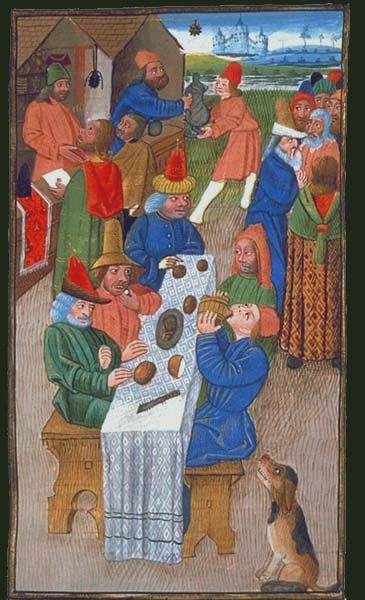
Manuscript painting (ca. 15th century: Biblioteque Nationale, Paris)
More on the Topic…
Massimo Montanari. Medieval Flavors: Food, Cooking, and the Table. Translated by Beth Archer Brombert. Arts and Traditions of the Table: Perspectives on Culinary History. New York, New York: Columbia University Press, 2015.
Caroline Walker Bynum. Holy Feast and Holy Fast: The Religious Significance of Food to Medieval Women. The New Historicism: Studies in Cultural Poetics. Berkeley: University of California Press, 1987.
Martha Carlin and Joel T Rosenthal. Food and Eating in Medieval Europe. London: Hambledon Press, 1998.
Maria Dembińska. Food and Drink in Medieval Poland: Rediscovering a Cuisine of the Past. Translated by Magdalena Thomas, Philadelphia: University of Pennsylvania Press, 1999.
Flavie Deveaux
Bibliography: Adamson, Melitta Weiss. Food in Medieval Times. Food through History. Westport, Conn.: Greenwood Press, 2004; Banegas Lopez, Ramon A. “Consumption of Meat in Western European Cities during the Late Middle Ages: A Comparative Study.” In Food & History 8, no. 1, Université de Versailles Saint-Quentin-en-Yvelines, France (2010): pp. 63-86; Ben-Daniel, John. “The Sacrificial Symbolism of the Lamb in the Book of Revelation.” Academia.edu, 2005; Black, Maggie. The Medieval Cookbook. Los Angeles: J. Paul Getty Museum, 2012. Woolgar, C. M. The Culture of Food in England, 1200-1500. New Haven: Yale University Press, 2016; Bynum, Caroline Walker. Holy Feast and Holy Fast: The Religious Significance of Food to Medieval Women. The New Historicism: Studies in Cultural Poetics. Berkeley: University of California Press, 1987. https://doi.org/10.1525/9780520908789; Carlin, Martha, and Joel T Rosenthal. Food and Eating in Medieval Europe. London: Hambledon Press, 1998; Dalby, Andrew and Rachel. “A History of Food in Greece.” In Gifts of the Gods. Reaktion Books: Food and Nations series (2017): 211-261; Dembińska, Maria. Food and Drink in Medieval Poland: Rediscovering a Cuisine of the Past. Translated by Magdalena Thomas, Philadelphia: University of Pennsylvania Press, 1999; Graham, Jenny. “The Ghent altarpiece after World War II: Restitution, Restoration, and Redemption.” In International Journal of Cultural Property 28, Cambridge University Press, 2021): 343-367; Groeneveld, Leanne. “The York Bakers and Their Play of the Last Supper.” In Early Theatre 22, no. 1, University of Regina (2019): 37-70; Hartman, Laura M. “Consuming Christ: The Role of Jesus in Christian Food Ethics.” In Journal of the Society of Christian Ethics 30, no. 1 (2010): 45–62; Haywood, Louise M. Sex, Scandal and Sermon in Fourteenth-Century Spain: Juan Ruiz’s Libro De Buen Amor. 1st ed. The New Middle Ages. New York: Palgrave Macmillan, 2008; Johnson, Holly. “The Divine Dinner Party: Domestic Imagery and Easter Preaching in Late Medieval England.” In Traditio 67 (2012): 385-415; King, Pamela M. “The Early English Passion Play.” In The Yearbook of English Studies 43 (2013): 69–86. https://doi.org/10.5699/yearenglstud.43.2013.0069; Montanari, Massimo. Medieval Flavors: Food, Cooking, and the Table. Translated by Beth Archer Brombert. Arts and Traditions of the Table: Perspectives on Culinary History. New York, New York: Columbia University Press, 2015. https://doi.org/10.7312/mont16786; Russo, Nicholas V. “The Early History of Lent.” Indiana: Baylor University Press, 2013; Ryan, Patrick. “Marlowe’s ‘Edward II’ and the Medieval Passion Play.” In Comparative Drama 32, no. 4 (1998): 465–95. http://www.jstor.org/stable/41153944; Von Bockenheim, Johannes. “Registrum Coquine (1435).” In Raccolta di Testi per la Storia della Gastronomia. Transcribed by Edoardo Mori, 2018; Woolgar, C. M. “Bread, Meat and Dairy Foods.” In The Culture of Food in England, 1200-1500. New Haven: Yale University Press (2016): 62-82.
 Can I Tell You About That: A Blog About History & Art