

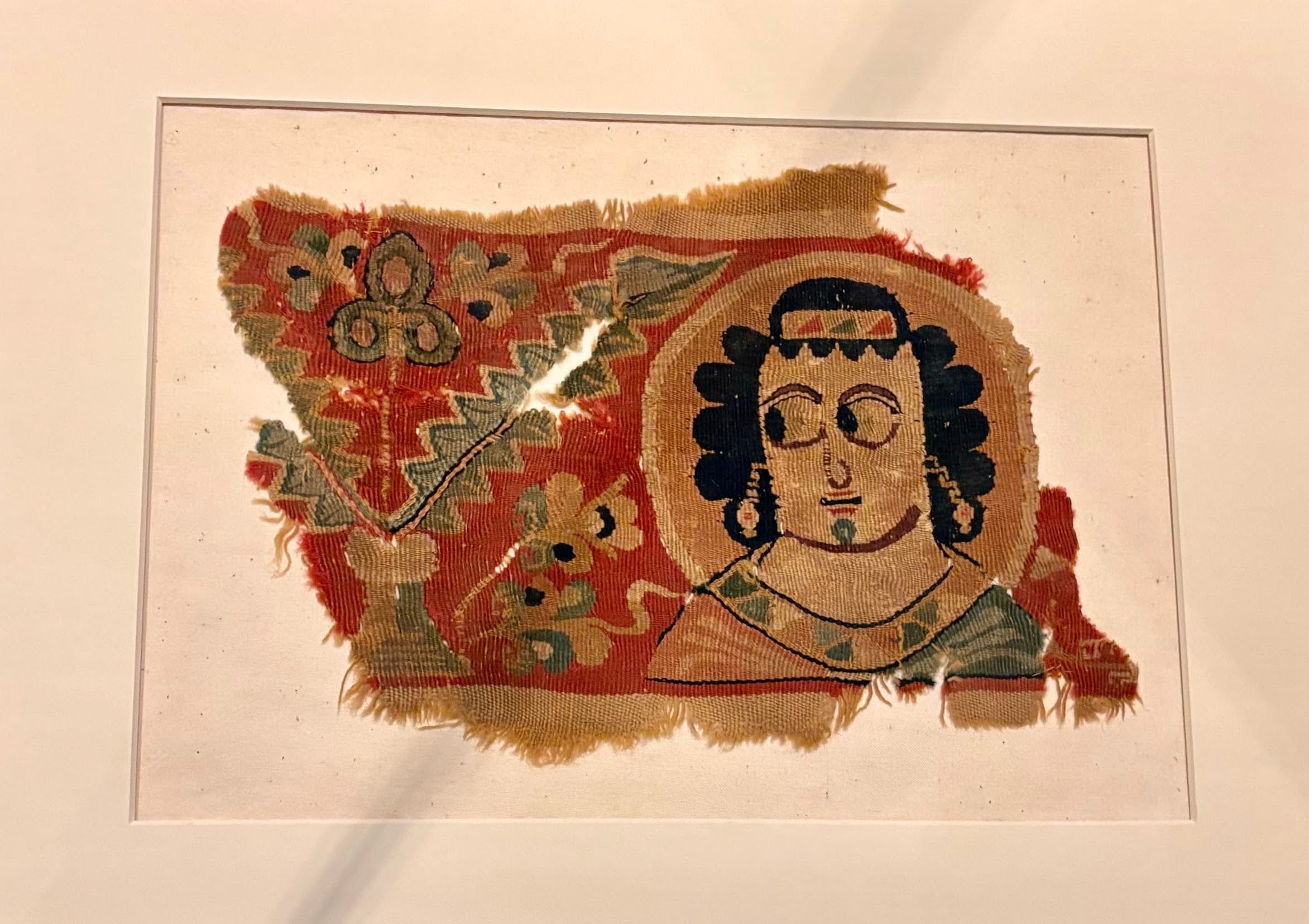
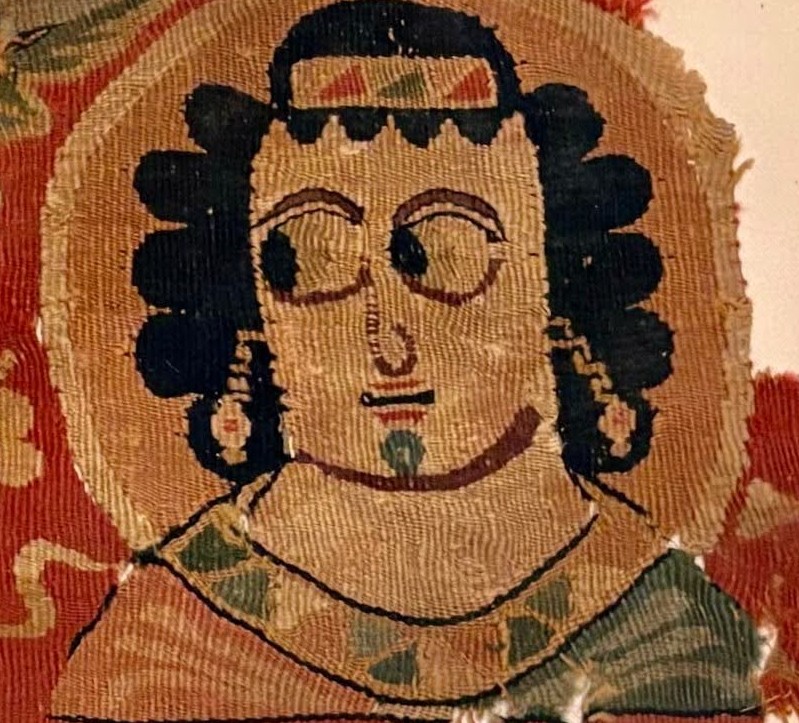
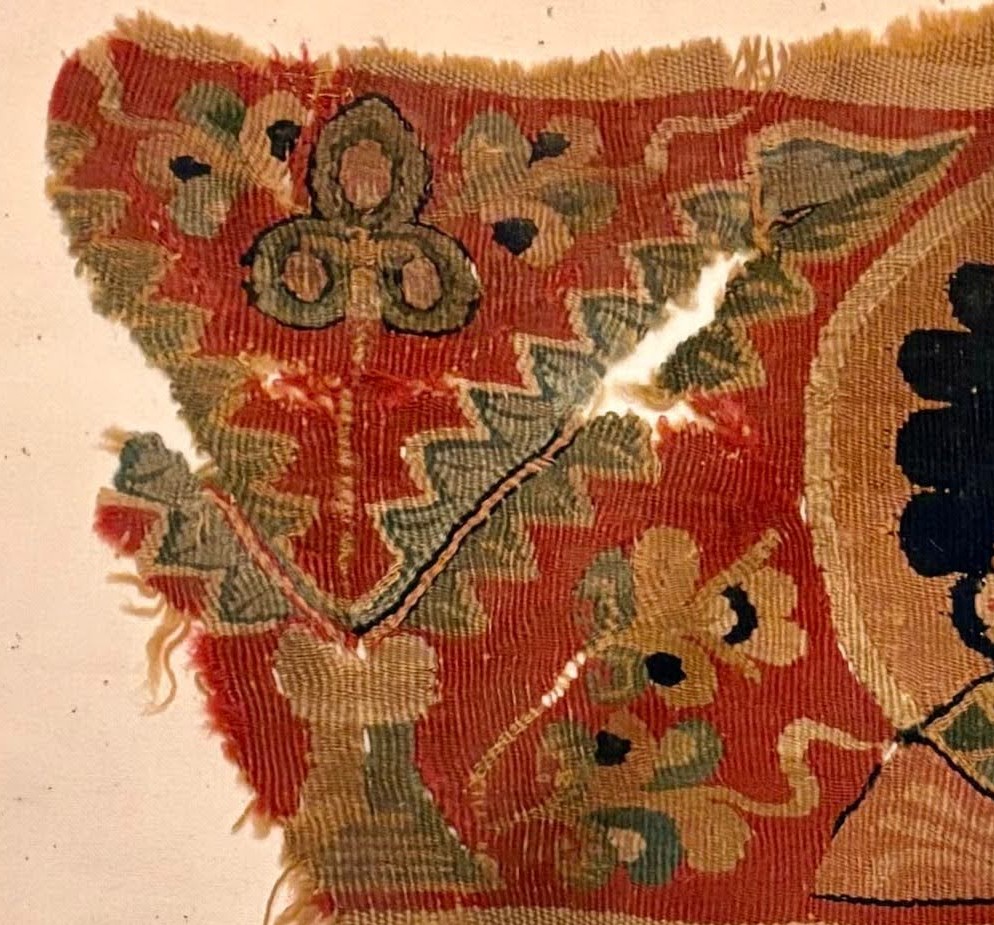
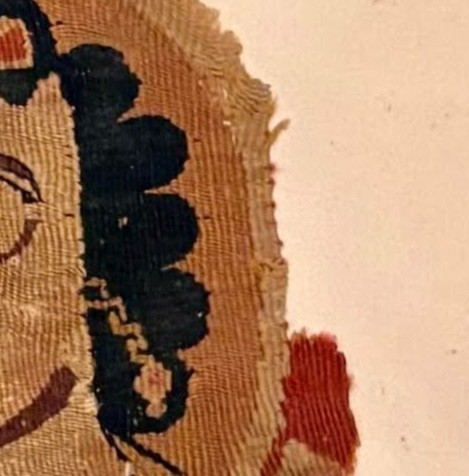
Fragment of a Woven Cloth with Decorations of a Female Bust and Vegetal Repeat Patterns, ca. 5th-6th century, Egypt (currently held at the Montreal Museum of Fine Arts).
The Side-Eye Girl
Decorative textiles featuring both Ancient Greek or Roman figures and the bright styles, patterning, and colours associated with Middle Eastern and Asian art were greatly appreciated by the Egyptian elites between the 1st century and the Muslim conquest of 639 CE, known as the Coptic period. Various surviving textile fragments from this period, display ancient figures as repeat patterns with ornamental frames surrounding the tapestry, vegetal motifs between the bust images, prominent outlines, and a schematic and more reduced modelling of the characters. These extant textiles provide insight into the domestic environments of early Egyptian Christian elites where interior decorations reflected familial values. Today, one such fragment from a domestic wall hanging is held at the Montreal Museum of Fine Arts as their only Copt textile currently on display. Fragment of a Woven Cloth with Decorations of a Female Bust and Vegetal Repeat Patterns, known as The Side-Eye Girl for the purpose of this essay, depicts a female bust with wide and unnaturally expressive eyes and dark hair. The figure wears a mantle, lavish jewelled earrings, and a hair ornament. Behind her is a halo and to her left are green and white acanthus and lotus plants. The colour scheme is simple yet bold. The background is bright red, while black outlines the upper torso of the female figure and white outlines the acanthus plant and forms borders for the halo and the top and bottom frames.
Measuring 25.8 × 17.6 centimetres in dimension, this textile fragment would have existed as a part of a large tapestry hanging that covered a significant surface area of the wall. Comparing it to a group of similar fragments found in several museums in North-Eastern United States and Canada, scholars have attributed The Side-Eye Girl to the 5th or 6th centuries. Beyond this information, there is limited knowledge regarding The Side-Eye Girl fragment, and even less published on the subject. Nevertheless, these skilfully woven fragments are a testament to the importance placed on the artworks displayed in elite homes during the Coptic world of Late Antiquity. During the Late Antiquity period, frequent trade between China, South Asia, the Middle East, and the Ancient Mediterranean worlds is evident through excavated textiles which depict imagery from across Eurasia. The international exchange of such textiles along the Silk Road and beyond facilitated the emergence of locally woven variations; weavers operating in Egypt during its period under Byzantine rule were undoubtedly familiar with both Eastern and Western luxury styles and likely drew inspiration from them. Indeed, the intersection of these cultures culminated in the complex production of domestic furnishings for the elite populations. The Coptic people of Late Antiquity created an intersection of contemporary styles while simultaneously fostering their own designs. These designs provided upper-class homes with the means to communicate their status and their family values to visitors and familial members alike. Although our understanding of this visual language has since been lost, an analysis of The Side-Eye Girl can open our eyes to Coptic domestic life.
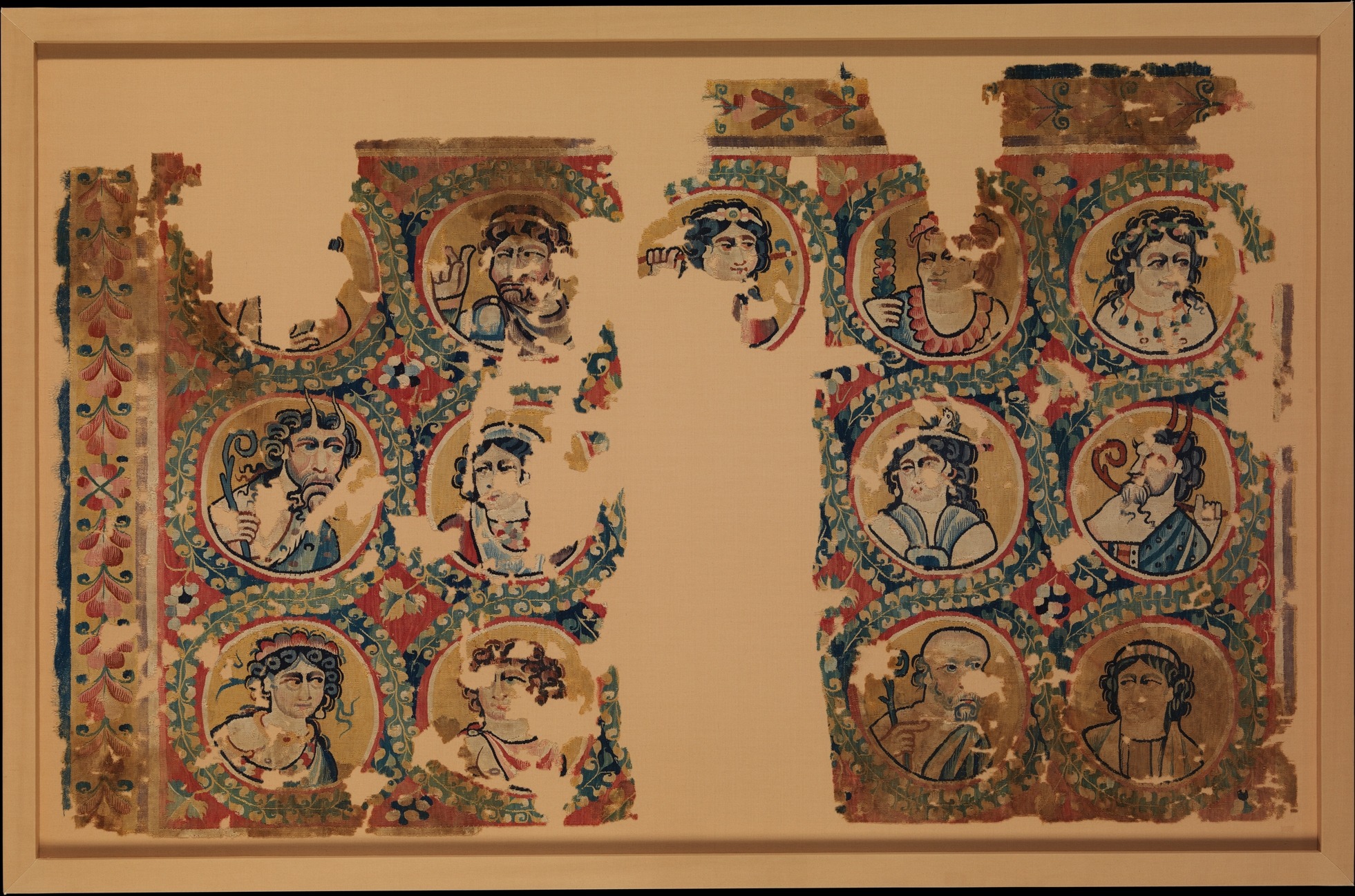
Hanging with Dionysian Figures, 5th to 7th century (currently held at The Metropolitan Museum of Art)
As Elite Imagery
The Side-Eye Girl textile contains several elements that allude to its representation of Antiquity and the versatile space-making tools that this provided for the Byzantine domestic environment. Rainer Warland writes that after the fall of the Western Roman Empire, the Eastern Empire and its culture looked to the ancient worlds of Greece and Rome to strengthen their connection with their ancestors. During the 5th and 6th centuries, Byzantine people therefore used symbols from Antiquity to display both academic distinctions and funerary portraiture. While funerary portraiture created detailed images of individuals, The Side-Eye Girl’s generic features demonstrate that it was designed as an academic image instead, which grants its owner the elevated status associated with being well educated and knowledgeable about the ancient world. Figures representing Antiquity allowed patrons to showcase their elite level of sophistication and expertise in classical learnings. Broken down further, The Side-Eye Girl, as an ancient woman, brought knowledge and respect for the ancient world into the home. This enhanced the overall atmosphere of this upper-class space, which required upper-class knowledge to fully comprehend its significance in the world.
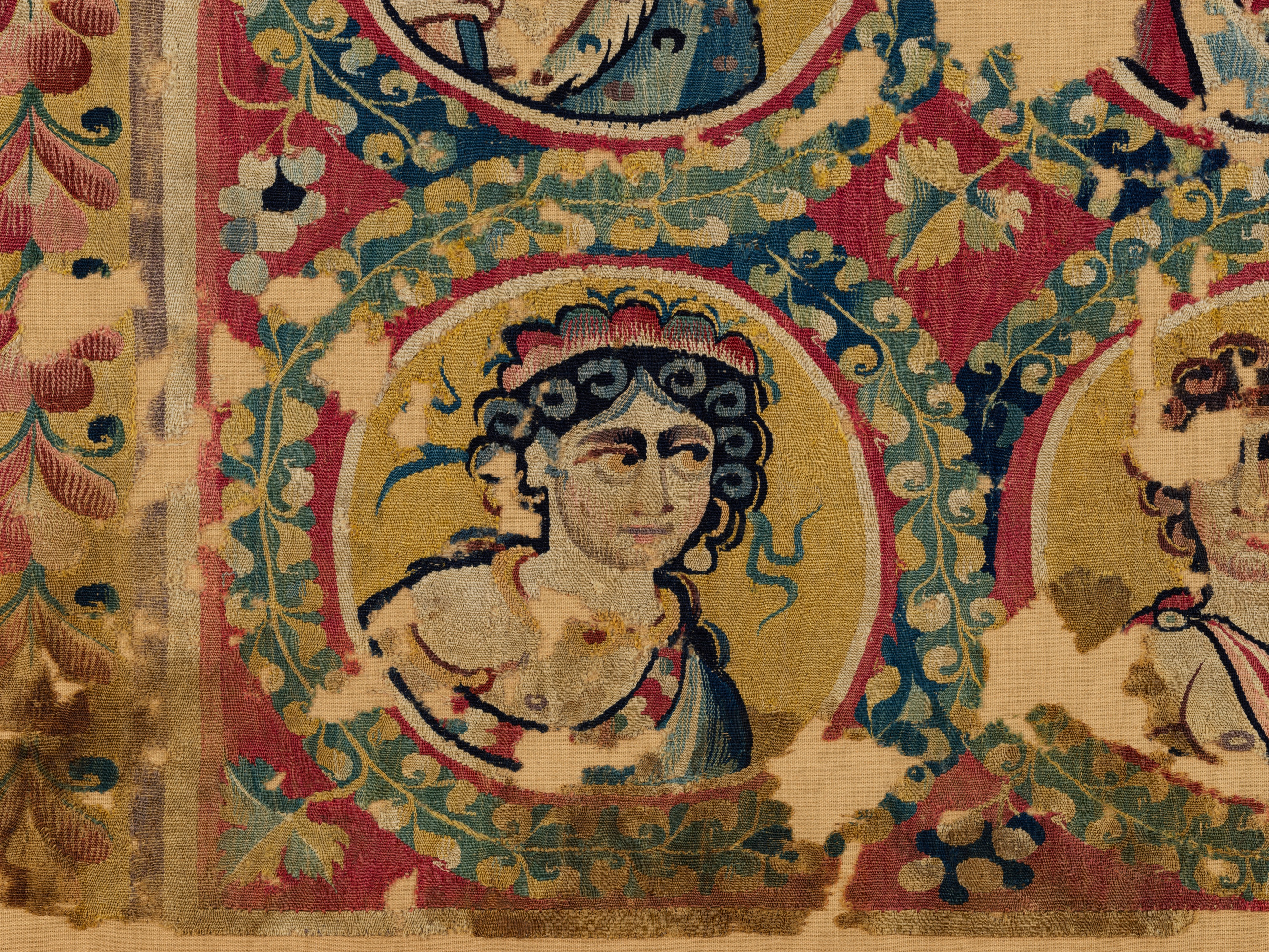
Detail of Hanging with Dionysian Figures
The use of an educated aesthetic in tapestry art played a significant role in creating a more dynamic space for upper-class homes. By incorporating imagery that only the educated elite could understand, these tapestries transformed a space into an area for academic discussion and contemplation. This left those who were less educated visibly distinct within this defined space. Antiquity figures were used to showcase one’s education to guests, providing the interior with a more sophisticated presence that elevated the overall status of the home. The incorporation of learnt elements that the lower classes could neither afford nor understand gave The Side-Eye Girl tapestry an upper-class aesthetic that only the rich could fully comprehend. This approach created a more dynamic space overall, and even after Christianity became the official religion of the New Roman Empire, educated members of the elite continued to rely on the Ancient world as a cultural benchmark and a defining concept for academia and state organisation. Consequently, nobles wished to surround themselves with classical knowledge, which inevitably influenced the art of upper-class homes. In particular, they also wanted to show their understanding of the links between pagan and Christian figures. For example, the Greco-Roman god of wine, Dionysos, was frequently portrayed in early Byzantine art including textiles because of his association with Christ. In Hanging with Dionysian Figures, female figures shown alongside Dionysos, share similarities with The Side-Eye Girl’s imagery, including jeweled earrings, hair accessories, dark hair, and ornate collars. If the complete Side-Eye Girl textile included images of Dionysos, then it also reflects a higher understanding of Christ, which elevated the sophisticated meaning of The Side-Eye Girl tapestry. As a Coptic textile, The Side-Eye Girl displays the religious influences of the weaver and patron on the overall design through the incorporation of ancient figures as learnt representations of Christian ideology.
As the Western Roman Empire fell in the 5th century, Byzantine identity became synonymous with ancient culture and Egypt adopted many of these new ideas and blended them with their preexisting aesthetics. For example, the Roman sculpture Marble Bust of a Woman from the 3rd century, features a female figure with curly hair and a similar facial expression. In addition, this female bust also gazes over her shoulder and away from the viewer, a symbol of a pensive woman in Antiquity. This comparison with The Side-Eye Girl helps to further solidify our understanding of the Coptic textile as a representation of a generic, wealthy and ancient woman, which undoubtedly engaged with Ancient aesthetics for its elite value. Vine scroll patterns were also popular in the Late Antiquity and Early Christian periods and were featured in many textile and sculptural artworks. During Antiquity, vines and grapes were connected to Dionysos, through their connotation with wine, and were frequently used in funerary portraiture as early as the 1st century CE. Through its connection to Dionysos, Early Christians also adopted vines scroll motifs as a symbol of Christ’s blood through its elite understanding as academic imagery. The Side-Eye Gir features plant motifs with curves similar to vine scrolls, connecting this textile fragment to elite academic understandings of ancient imagery.
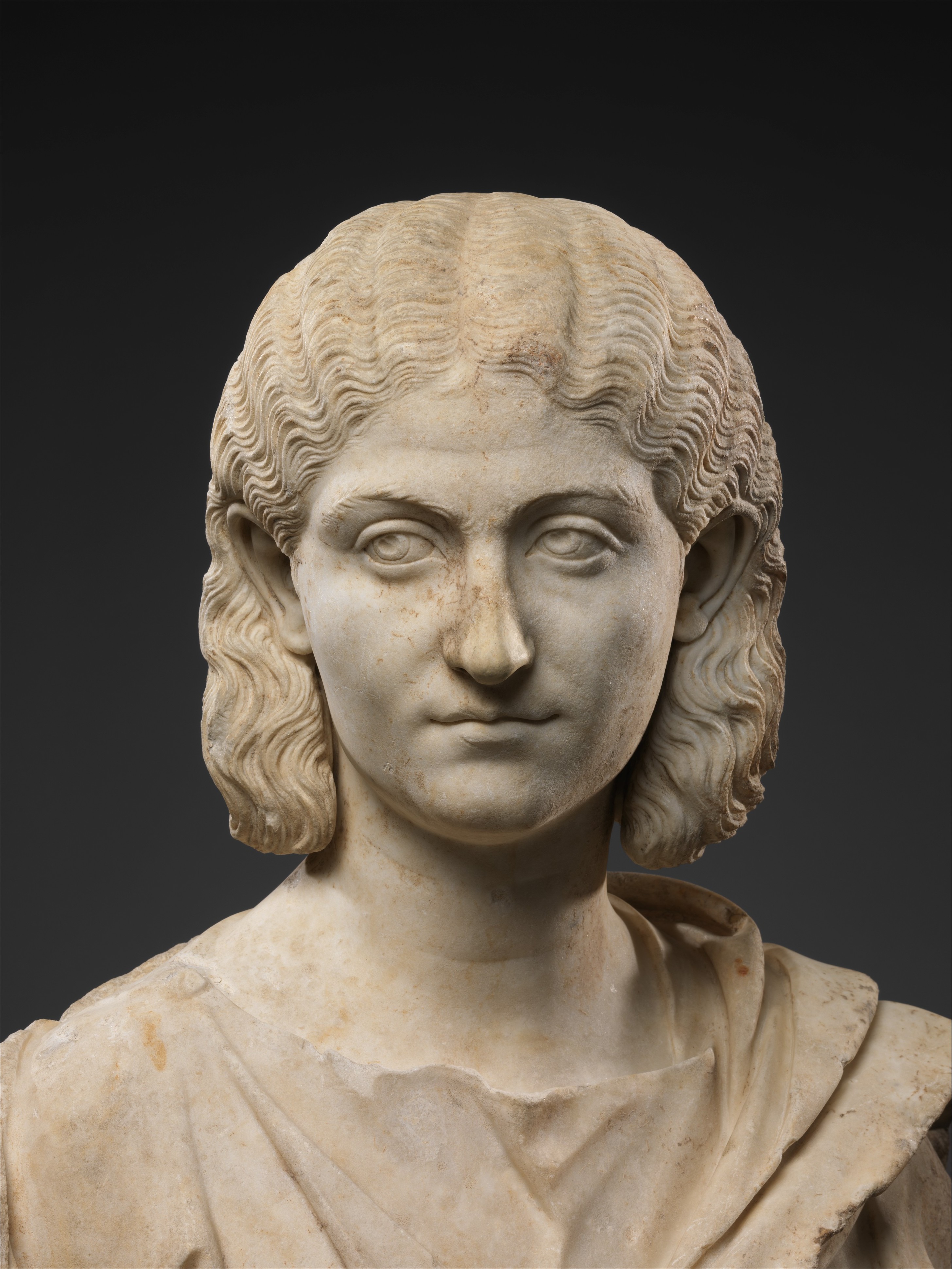
Marble Bust of a Woman, 3rd century CE, Roman (currently held at The Metropolitan Museum of Art)
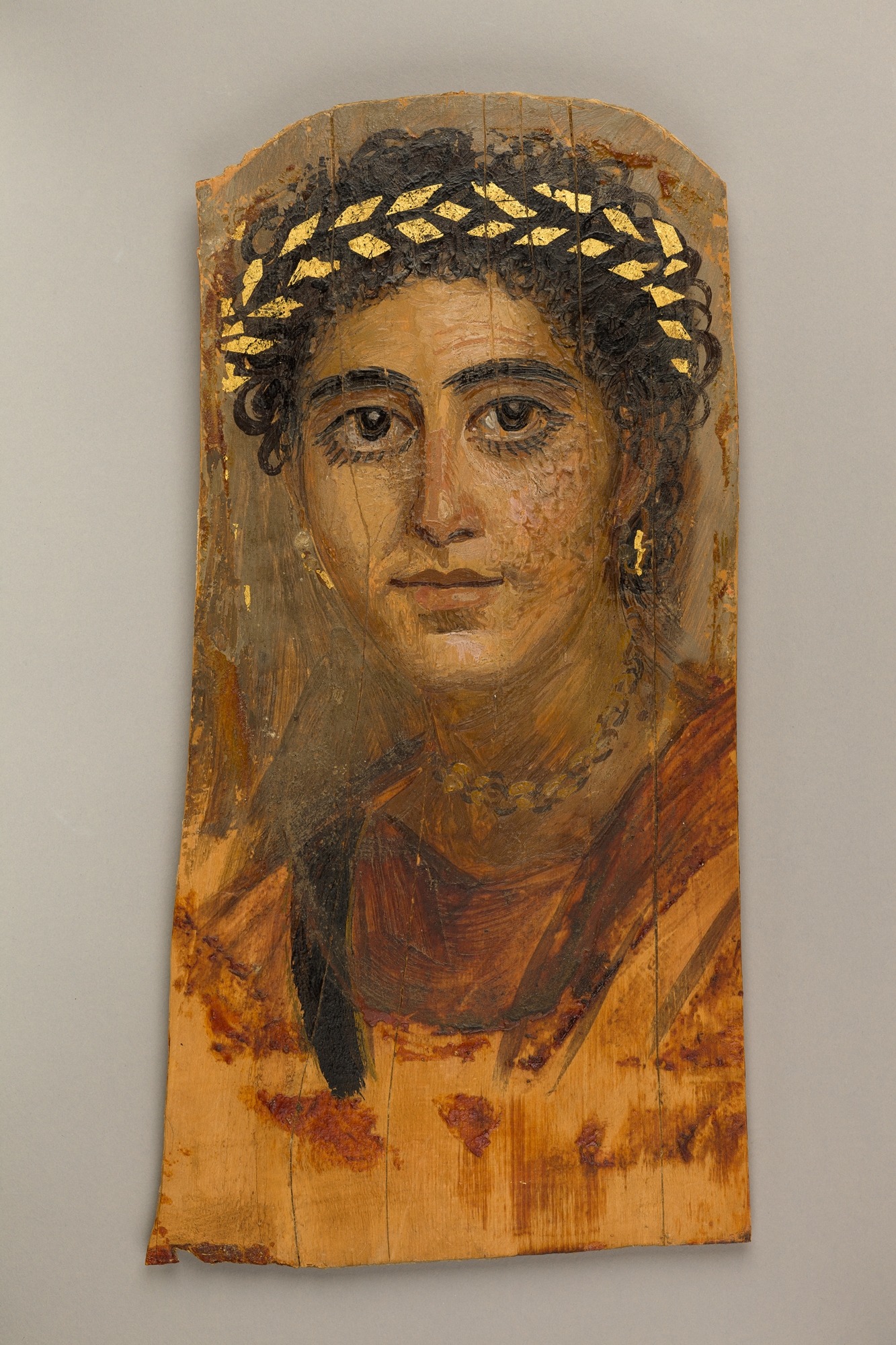
Portrait of a Young Woman in Red, 90-120 CE, Egypt (currently held at The Metropolitan Museum of Art)
The incorporation of ancient traits in The Side-Eye Girl textile may also be interpreted as a gesture of reverence for the ancient world, thereby fostering a multifaceted academic atmosphere. This is similar to the use of textile figures as tools to remember deceased relatives, according to Karel C. Innemée. However, unlike depictions of known individuals who have passed away, these depictions are limited in detail, much like other representations of ancient figures, implying that viewers contemplated Antiquity rather than a specific ancestor. Fayum funeral portraits, which were popular between the 1st and 8th centuries in Egypt, clearly show a defined difference between portraits of known individuals and ancient figures, such as The Side-Eye Girl. For instance, Portrait of a Young Woman in Red portrays an intricate and detailed shaped figure with a more pronounced face, and wide eyes looking directly at the viewer, thereby establishing a connection between the two individuals. To contrast this, these characteristics are not present in the representation of The Side-Eye Girl figure, as its simpler design signifies an idea of an ancient woman rather than a specific person. In this case, the connection is established between the viewer and the concept of Antiquity, rather than connecting them directly with the person being depicted. Warland argues that in the Byzantine Empire, “the focus [of people] was no longer on the deeds of any particular emperor and his military success, but rather on the concept of imperial rulership… [where] triumph becomes a perpetual attribute of rulership granted by the gods, later God.” This perpetual triumph connected the contemporary nobles to the ancient nobles, and thus respecting Antiquity was a way of respecting the triumph of the past. Furthermore, the image of a noble woman could have been used as a tool to convey certain ideas within specific spaces, including the concept of the loss of the Western Empire. Although this was similar to mourning portraits, it was not used exclusively to remember a deceased loved one. Instead, the use of Ancient styles and patterns enables the contemporary viewer to recognize this elite understanding of cultural mixture. The Side-Eye Girl was created in a society that was synthesised with Greek, Roman, Christian, and Egyptian cultures, as is evident in the use of imagery associated with Antiquity, Christianity, and Fayum portraits.
As An Allegorical Figure
In the realm of Byzantine art, female figures often served as allegorical messengers, prompting viewers to reflect on concepts such as affluence and religious values. The Side-Eye Girl textile presents a figure adorned with gold and jewelled earrings, a hair accessory, and an ornate costume, which are elements associated with abundance and are featured in female portraits symbolising Antiquity and prosperity. These elements portray the figure in the textile as affluent and likely a member of the elite class, a notion associated with inherent nobility. Here, the halo behind the figure’s head suggests that she may have been compared to a religious figure, now used as a non-religious decorative element. Wealthy figures in textiles served to embellish domestic spaces, transmitting an allegorical message of wealth and prosperity that homeowners could contemplate. This practice elevated the subsequent space, transcending aesthetics to create environments that evoked the allegorical themes depicted in the tapestry. Additionally, members of the educated elite could be either men or women, and The Side-Eye Girl’s use of a female figure may indicate that this tapestry was hung in a female-designated space. As an allegorical figure, The Side-Eye Girl communicates information about the type of person who owned and occupied the space where the tapestry would have been displayed.
Elements from Real Life
Tapestries that were able to evoke ideas of wealth for viewers inevitably created a more dynamic atmosphere overall by setting up a space to be both an area to exist in and a place for identifying the wealth and social status of the owner. Warland explains that allegorical figures were common during this period, but their use changed over the centuries as the Western Roman Empire fell and Christianity took over the remaining territories. Depictions of abundance within a home also provided symbols to viewers with which the homeowner wished to be associated, in this case, prosperity. The Side-Eye Girl is visually striking due to its large scale and decorative elements, which associated it with this idea of richness. The figure is adorned with jeweled earrings resembling inlet pearls similar to those found in depictions of female Dionysian figures. Despite its simple design, The Side-Eye Girl figure exudes affluence through its opulent accessories. For instance, she is depicted with loop-chain earrings that were popular among the 6th century Byzantine elites. Furthermore, the shawl draped over her shoulders is likely meant to depict a luxurious fabric, as suggested by the three lighter coloured lines running across each shoulder that resemble the reflection of the light off the material. This fabric could have been embroidered with metallic threads or made from a silky and sericeous material, both of which would have been costly and therefore symbolised the wealth of the figure. The acanthus plant, which is native to Egypt and associated with Coptic lands can also be seen as a symbol of prosperity, given that Egyptian land was a major source of wealth for the Byzantine Empire at this time. These various symbols of affluence allowed The Side-Eye Girl fragment to serve as a representation of the homeowner’s abundance and social status. The presence of a wealthy figure in a tapestry would have conveyed ideas of prosperity and nobility to the home it hung in. By presenting viewers with symbols of success, the tapestry would have prompted contemplation of these ideas, which could also serve to manifest and reinforce them within the home.

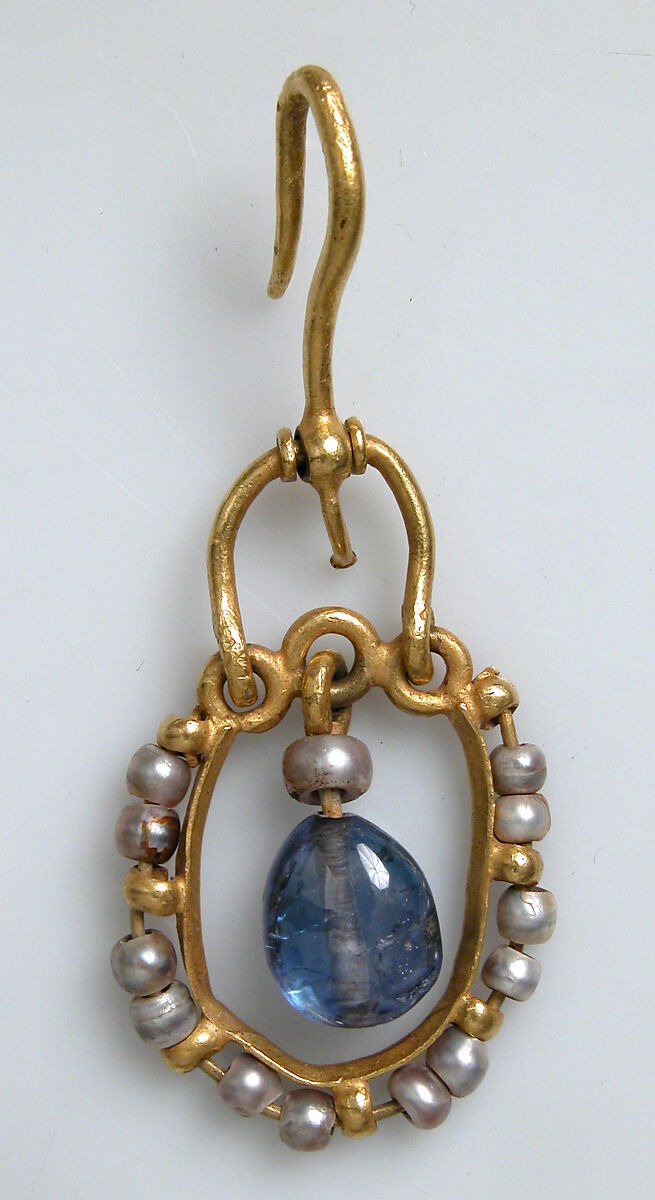


The Side-Eye Girl is a textile piece that embodies both affluence and the Christian values that were integral to Coptic society during the 5th and 6th centuries. As Christianity gained prominence in the Byzantine world, noble figures depicted in textiles, mosaics, or paintings were sometimes equated with God or the Virgin Mary. This association reached its peak during the 7th and 8th centuries when the Iconoclasm period occurred, but prior to that the nobility and especially the emperor or empress were associated with Christianity. The luxurious and jeweled nature of these figures were intertwined with their connection to God, rendering their images as symbols of religious prosperity. Allegorical figures were used to represent the divine, so viewers would react and contemplate God in many types of images. Therefore, the wealth depicted in The Side-Eye Girl textile helps elevate the status of the home it was in through religious means. Moreover, the acanthus plant depicted on the left side of the textile fragment held symbolic significance in ancient Christian traditions, representing rebirth or death, and eternal life for Dionysiac worshippers and therefore for Christians. This connection further emphasises the association with religious prosperity through the fragment’s use of wealth symbolism. Although The Side-Eye Girl is not an actual icon, she symbolises and resembles those from the same period. The most revealing difference between the two subjects lies in the eyes of the figure. Byzantine icons, like the Fayum funeral portraits, look directly at the viewers, engaging them in spiritual contemplation of the religious lives led by the figures. On the contrary, The Side-Eye Girl is not a figure for veneration or prayer, like icons and funerary portraits, respectively, but rather an allegorical representation that reminds viewers of Christianity. Her gaze towards the acanthus plant rather than the viewer suggests that she is lost in thought, a technique also seen in depictions of ancient figures. Here, the main purpose of the artwork is to engage viewers through complex thought rather than a direct relationship with the person represented. While the tapestry fragment represents a woman from Antiquity, it was created in a Christian culture which inevitably influenced its visual production.

As a Repeat Pattern & Meditative Device
In its original form, The Side-Eye Girl would likely have been part of a repetitive motif; as such, it would have provided a third function. An example of what The Side-Eye Girl might have looked like in repeat pattern form can be found in the Icon of the Virgin and Child tapestry from the 5th century. Repeat patterns were used as tools for dynamic space-making, transforming symbols of mythology and the divine into means of casting spells and ceremonial purposes. Henry Maguire states that textile patterns such as these conveyed messages beyond the seen world and were used at all social levels in domestic interior displays. The Side-Eye Girl’s repeat pattern, depicting a female figure with an acanthus plant, is recognised as a common image in Coptic textiles and serves as a symbol of membership within the culture. Its owners were identifying themselves as Christian nobles, and the visual qualities of these textiles make that apparent to scholars today. These qualities, including the use of repeat patterns, elevated the atmosphere of the space and conveyed a sense of success and prosperity for the homeowners through spiritual engagement that moved beyond the space.
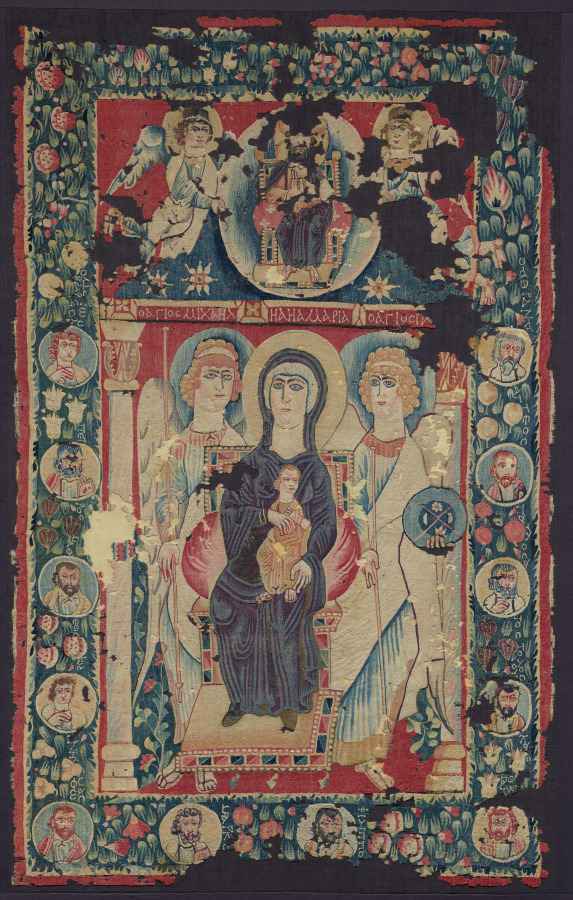
Icon of the Virgin and Child, 5th century CE, Egypt (currently held at The Cleveland Museum of Art)
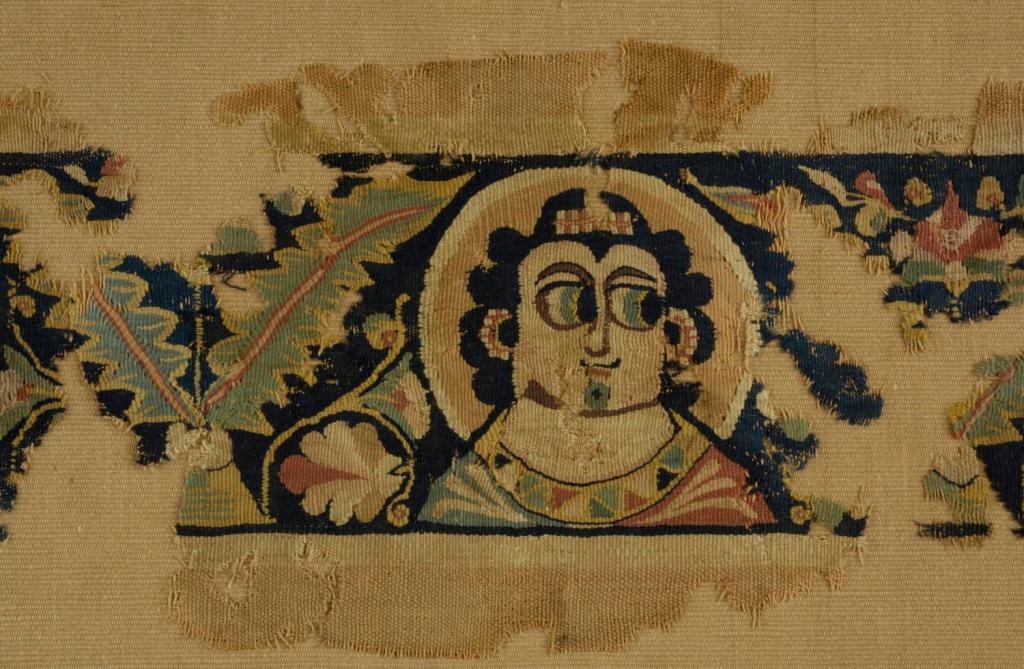
Heads Framed by Acanthus, 5th-6th century, Egypt (currently held at the Brooklyn Art Museum)
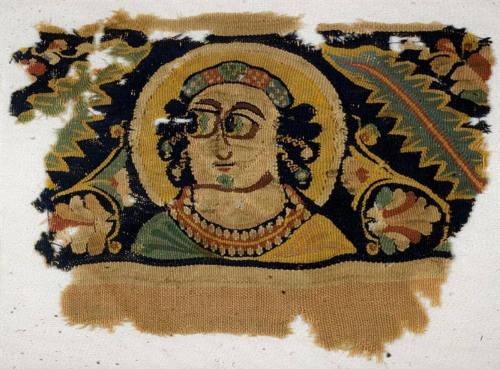
Polychrome Tapestry Band with a Human Head with Curly Hair Between Stylised Acanthus, 6th century, Egypt (currently held at the University of Toronto Art Museum)
Female figures in repeat pattern designs were frequently associated with mythology and spirituality, serving as academic, cultural, and divine symbols in Byzantine domestic spaces. These multifaceted representations contributed to a more dynamic atmosphere through the use of ceremony and personal relationships with the divine. Images of mythological female characters could be used for both religious and non-religious means, and the simplistic, antiquarian style of The Side-Eye Girl suggests that she likely served a similar purpose. Additionally, a mirrored symmetrical pattern was a popular motif style in the 5th to 8th centuries, Egypt. It is possible that The Side-Eye Girl would have been designed this way, similar to how the figures in Heads Framed by Acanthus and Polychrome Tapestry Band with a Human Head with Curly Hair Between Stylised Acanthus look towards opposite directions and could form a mirrored symmetrical pattern together. Maya Mueller posits that the use of mirrored symmetry in these designs reflects Egyptian imitations of Mediterranean mythological scenes, as this style merged Western characteristics with traditional Egyptian ones to create an intersectional design that catered to the needs of the Coptic population. In the same vein, The Side-Eye Girl textile features lotus plants that shoot out of the acanthus.
Byzantine society attached significant importance to the symbolic associations of colour in textiles, which were believed to facilitate meditative states for viewers. Specifically, the saturated and bright colours employed in The Side-Eye Girl fragment would have been associated with the concept of light, because of their highly pigmented and vibrant nature. This light was affiliated with the guiding light of God and necessitated a meditative and religious viewing practice for individuals. Colours, including those observed in The Side-Eye Girl, could “breath the spirit of magic” as described by Maguire, due to their repetition and vibrancy. Therefore, the colours enhanced the magical properties of the textile motif and connected itself to the engagement with spiritual magic. To create a dynamic atmosphere, motif-charms also require continuous visual engagement with the viewer and the space they occupy, to facilitate the connection with the divine. The vibrant colours in the textile fragment would have achieved this objective, as the eye naturally gravitates towards more luminous colours in an image or within a space. Maguire asserts that examples of red backgrounds and plant motifs often signified a spiritual connection within the design. The spiritual qualities of the colours were combined with the spiritual imagery to foster a meditative experience for viewers in the domestic space. This is further substantiated by the fact that spiritual connections created through imagery at this time necessitated a relationship with God that existed outside of church spaces. The personal relationship with God clearly demonstrates how the meditative experience of The Side-Eye Girl was intended for a secular home and was dependent on personal relationships with members of the household.
Conclusion
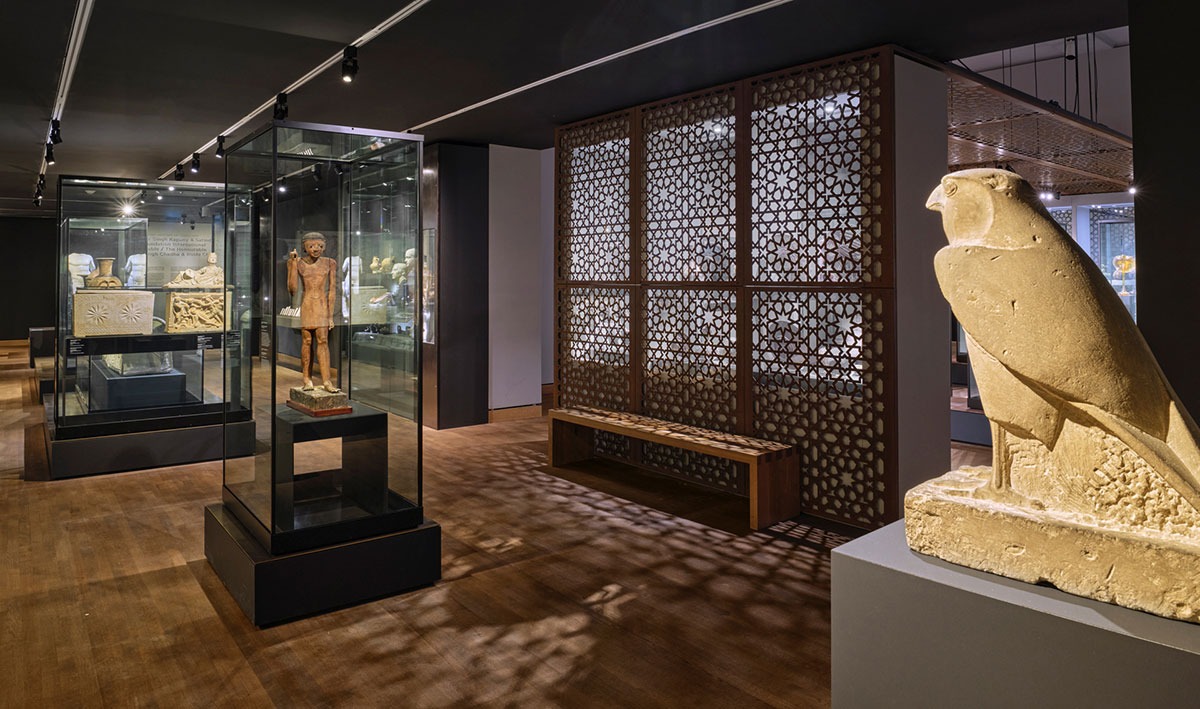
Detail inside the Arts of the World exhibit at the Montreal Museum of Fine Arts
Deep inside the Arts of One World exhibit at the Montreal Museum of Fine Arts, a fragment known here as The Side-Eye Girl can be found amidst Egyptian sarcophagi and Ancient Greek sculptures. At first glance, this textile fragment appears to be a simple depiction of a female bust figure next to an acanthus plant. However, in the Byzantine and Coptic worlds, such images held much greater significance. The Side-Eye Girl can be interpreted on various levels, with each layer of symbolism contributing to its dynamic and multifaceted nature. The connection to Antiquity served to define class and convey academic knowledge and respect for the ancient world. As an allegorical figure, the female character speaks to the viewers and their desire for manifestation through its association with wealth and religious prosperity. Additionally, The Side-Eye Girl was once a repeat pattern and its imagery connects back to Coptic culture and spiritual charms, which protected the domestic space. While finally, the colours, design, and physical permeability of the weave transformed the space into an atmosphere for ceremonial meditation. Although there is very little research on The Side-Eye Girl textile, its overall design can still reveal much about the Coptic society it was made in. By representing multiple forms of engagement, defined through its visual, technical, and social qualities, The Side-Eye Girl becomes a multifaceted and dynamic design that would have elevated the status of any domestic space during the 5th and 6th centuries of Egypt’s Byzantine rule.
More on the Topic…
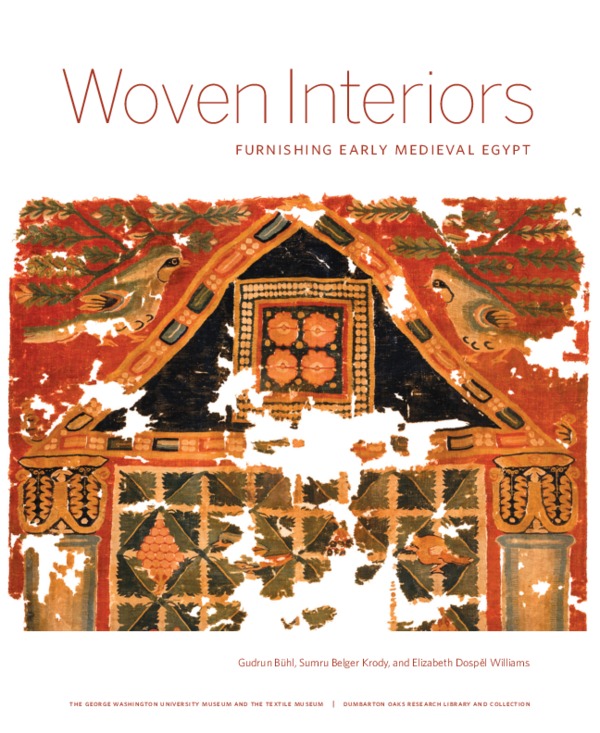
Elizabeth Dospěl Williams, Sumru Belger Krody, and Gudrun Bühl. Woven Interiors: Furnishing Early Medieval Egypt. The George Washington University Museum and The Textile Museum, 2019.
Phyllis Ackerman. Tapestry: The Mirror of Civilisation. Gorgias Press, 2011.
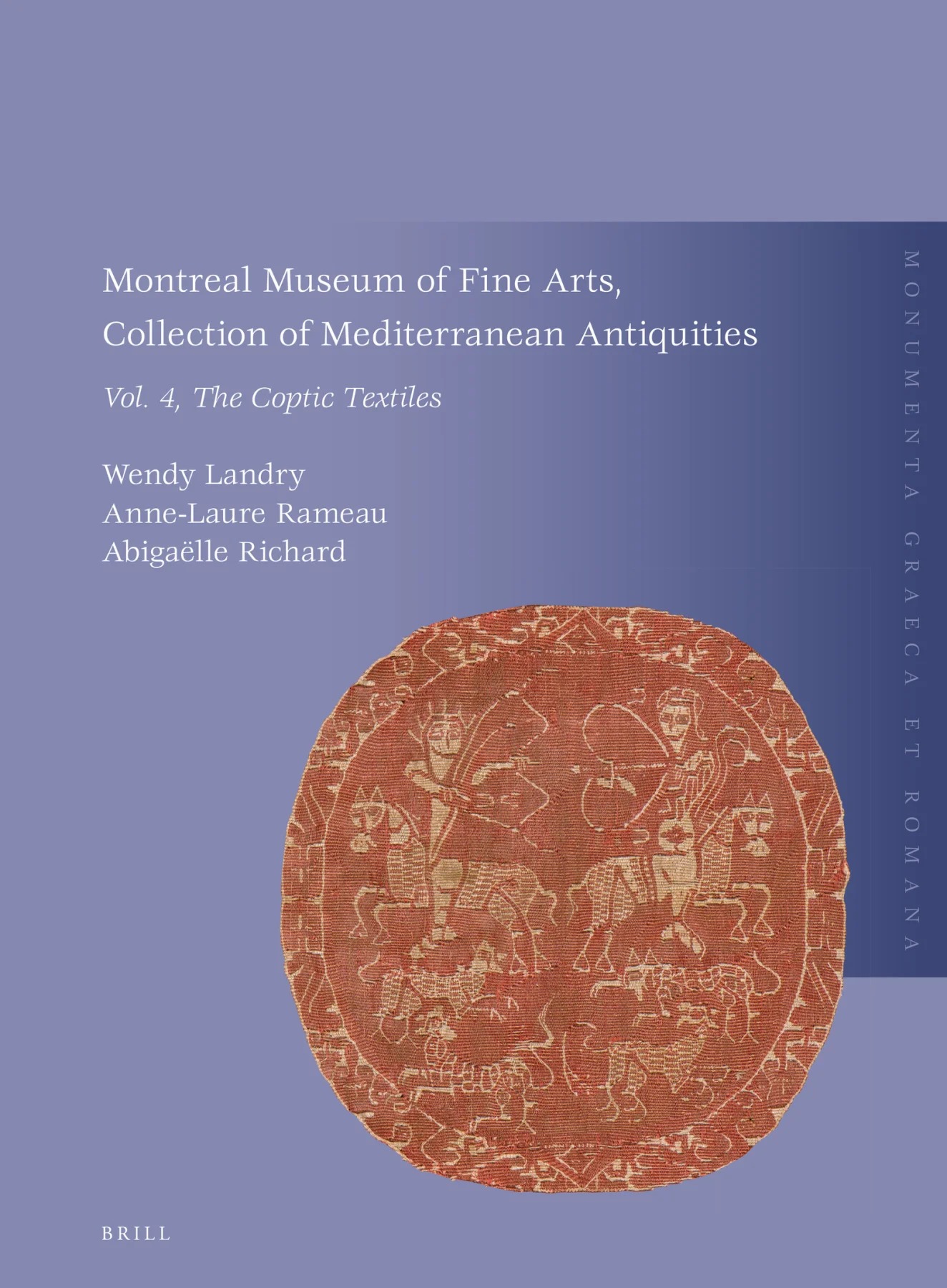
Wendy Landry, Rameau Anne-Laure, and Richard Abigaëlle. The Coptic Textiles. From Montreal Museum of Fine Arts, Collection of Mediterranean Antiquities 4, The Netherlands: Brill, 2019.
Flavie Deveaux
Bibliography: Ackerman, Phyllis. Tapestry: The Mirror of Civilisation. Piscataway, NJ: Gorgias Press, 2011; Ball, Jennifer L. “Rich Interiors: The Remnant of a Hanging from Late Antique Egypt in the Collection of Dumbarton Oaks.” Dumbarton Oaks Papers 73 (2019): 261-98; Ellabban, Esraa. “Highlights on the Use of Acanthus as an Ornamental repeat pattern from Greco-Roman to Islamic period.” JAAUTH 22, 3, Suez Canal University Press (2022): 1-16; Evangelatou, Maria. “Textile Mediation in Late Byzantine Visual Culture: Unveiling Layers of Meaning through the Fabrics of the Chora Monastery.” Dumbarton Oaks Papers 73 (2019): 299-354; Evans, Helen C. Melanie Holcomb, and Robert Hallman. “The Arts of Byzantium.” The Metropolitan Museum of Art Bulletin 58, no. 4, The Metropolitan Museum of Art Publishing (Spring, 2001): 4-68; Friedländer, Paul. Documents of Dying Paganism; Textiles of Late Antiquity in Washington, New York, and Leningrad. Berkeley: University of California Press, 1945; Innemée, Karel C. “Veneration of Portraits, Icons, and Relics in Christian Egypt.” Visual Resources: An International Journal of Documentation 19, 1 (2003): 57-66; Jungim, Han. “A Study on the Characteristics of the Designs on Coptic Textiles of Ancient Egypt.” In Journal of Fashion Business (2011): 112-124; Landry, Wendy, Rameau Anne-Laure, and Richard Abigaëlle. The Coptic Textiles. From Montreal Museum of Fine Arts, Collection of Mediterranean Antiquities 4, The Netherlands: Brill, 2019; Maguire, Henry. “Garments Pleasing to God: The Significance of Domestic Textile Designs in the Early Byzantine Period.” Dumbarton Oaks Papers 44 (1990): 215-24; Maguire, Henry. “Magic and the Christian Image.” Byzantine Magic. Havard University Press (1995): 51-72; Michaeli, Talila. “A Painted Tomb in the Upper galilee and the Meaning of its Pictorial Program.” The Metamorphosis of Marginal Images: From Antiquity to Present Time. Context & Meaning Conference, Academia.edu (2001): 237-242; Mueller, Maya. “Mythological Scenes, their Roman and Pharaonic Roots, and the Role of Symmetry on Byzantine Textiles.” Iconography, Academia.edu: 195-207; Muthesius, Anna. “Cloth, Colour, Symbolism and Meaning in Byzantium (4th-15th Centuries).” ΔΧΑΕ ΛΖ΄ (2016): 181-198; Saradi, Helen. “The Antiquities in Constructing Byzantine Identity: Literary Tradition versus Aesthetic Appreciation.” Hortus Αrtium Medievalium 17, University of Peloponnese (2011): 95-113; Spier, Jeffrey. Byzantine and the West: Jewelry in the First Millenium. Paul Holberton Publishing, 2012; Stoleriu, Irina-Andreea, and Adrian Stoleriu. “A Brief Introduction To The Byzantine Portrait Art.” SEA – Practical Application of Science 4, issue 11, Romanian Foundation for Business Intelligence (2016): 409-414; Teece, Denise-Marie. “ 8th century Textile Fragment, The Metropolitan Museum of Art, Accession no. 50.83.” Masterpieces from the Department of Islamic Art in The Metropolitan Museum of Art. Yale Press, Academia.edu (2011): 47-48; Thomas, Thelma K. “Material Meaning in Late Antiquity.” Designing Identity: The Power of Textiles in Late Antiquity. Princton University Press (2016): 20-53; Thomas, Thelma K. “The Medium Matters: Reading the Remains of a Late Antique Textile.” Reading Medieval Images: The Art Historian and the Object. edited by Elizabeth Sears and Thelma K. Thomas, Ann Arbor: University of Michigan Press (2002): 38-49; Warland, Rainer. “6. Defining Space: Abstraction, Symbolism and Allegory on Display in Early Byzantine Art.” Envisioning Worlds in Late Antique Art: New Perspectives on Abstraction and Symbolism in Late-Roman and Early-Byzantine Visual Culture (c. 300-600), edited by Cecilia Olovsdotter, Berlin, Boston: De Gruyter (2019): 120-136; Williams, Elizabeth Dospěl, Sumru Belger Krody, and Gudrun Bühl. Woven Interiors: Furnishing Early Medieval Egypt. Washington DC: The George Washington University Museum and The Textile Museum, 2019.
 Can I Tell You About That: A Blog About History & Art