
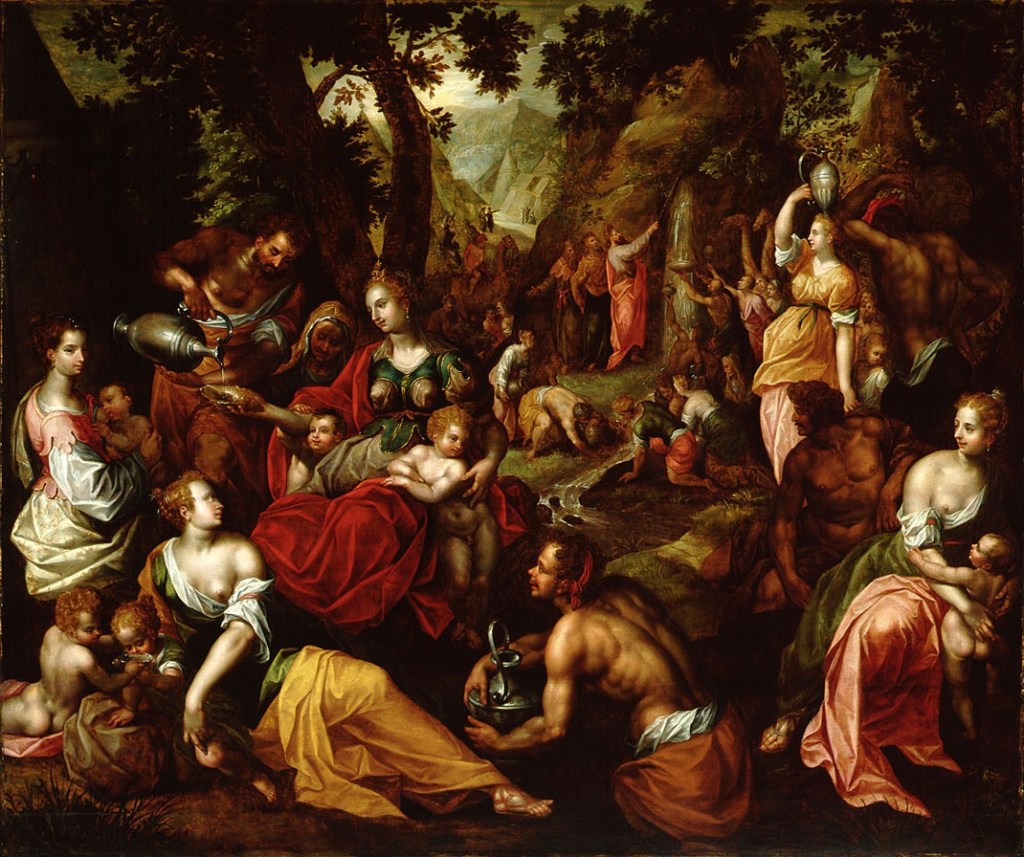
In the 16th and 17th centuries art world of the Northern Renaissance, styles developed to distinguish themselves from Catholic art in the South. New Protestant values aimed to de-idolize figures in art, turning the focus towards God and God alone. Many Netherlandish artists still took inspiration from Italian works of art, including ancient mythology and Roman sculpture. But the works of Italian artists were typically Catholic and did not appeal to Protestant audiences, who now favoured secular works of art. However, Hendrick de Clerck’s (1570-1630) Moses Striking the Rock (1610) defies this idea by creating a work of art that is both sacred and post-reformation in style. At a first glance, de Clerck’s Moses Striking the Rock feels very Catholic with its luxurious scene depicting the Old Testament story of Moses and the water spring. This painting shows a scene of people relaxing and drinking water, with fantastic fabrics and lush Italian greenery. Through further analysis though, Hendrick de Clerck’s Moses Striking the Rock shows how the artist was able to exemplify a post-reformation art style in a sacred work of art, seen in the formal characteristics, the theme of community, and the Biblical story as a tool for reflection.
Text
Text
Text
Text
Text
Text
Text
Text
Text
Text
Header (Conclusion)
Text
 Can I Tell You About That: A Blog About History & Art